

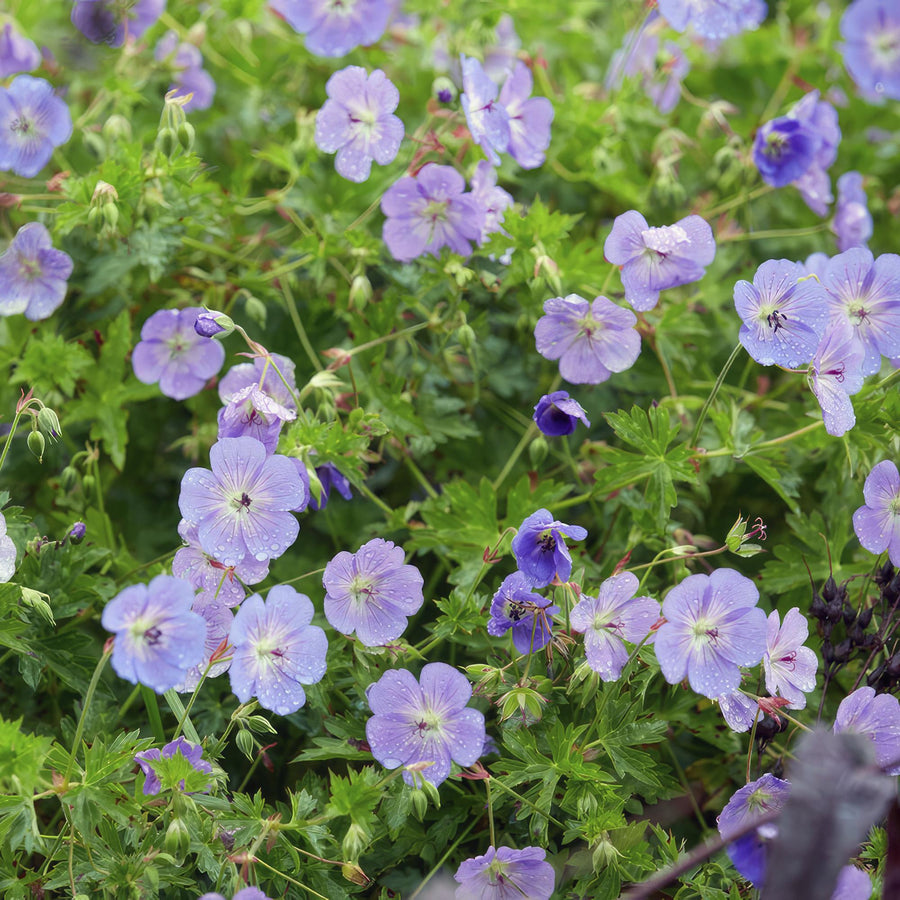


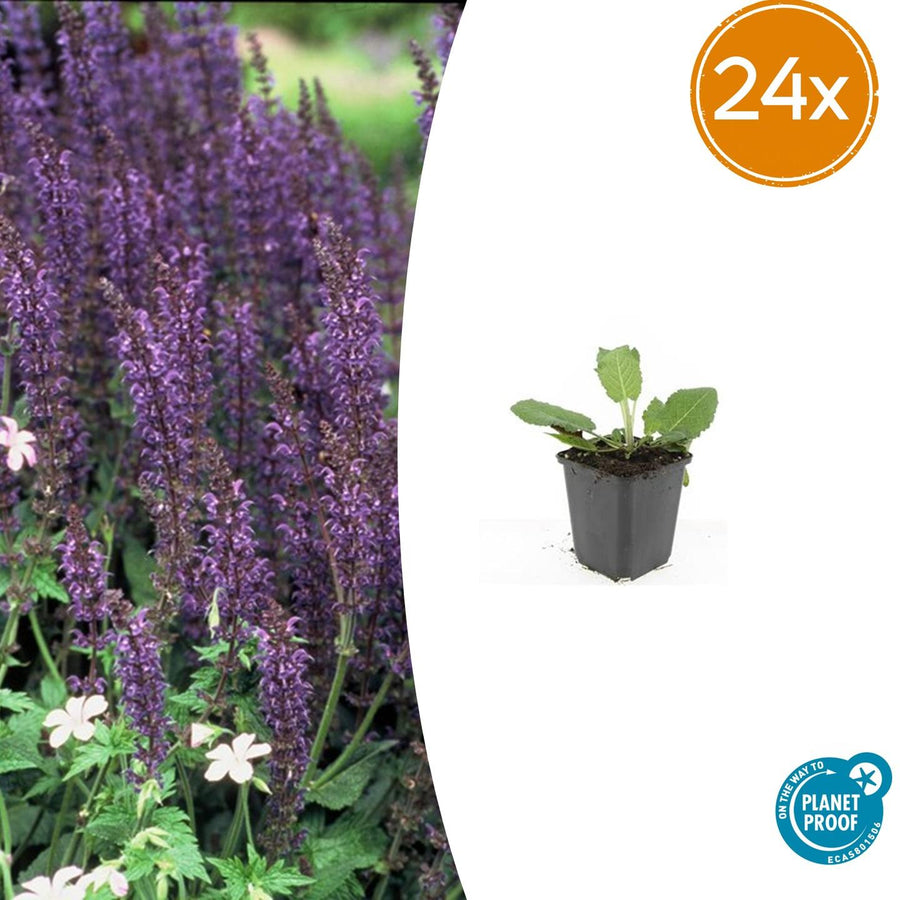
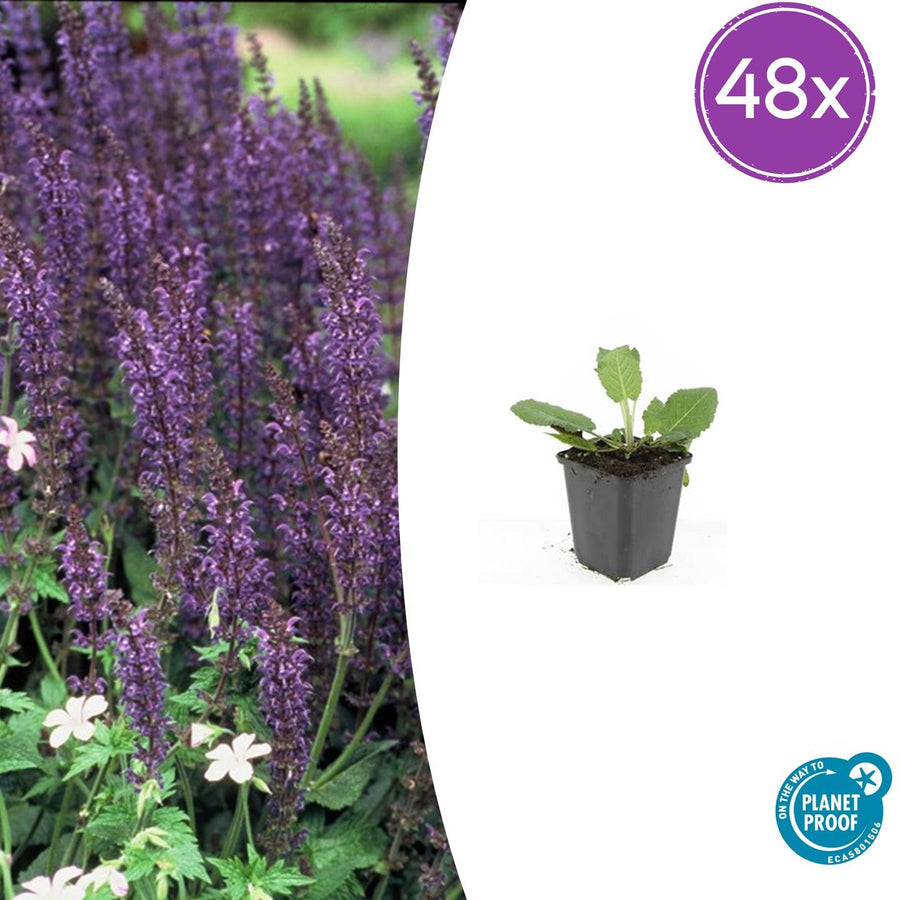
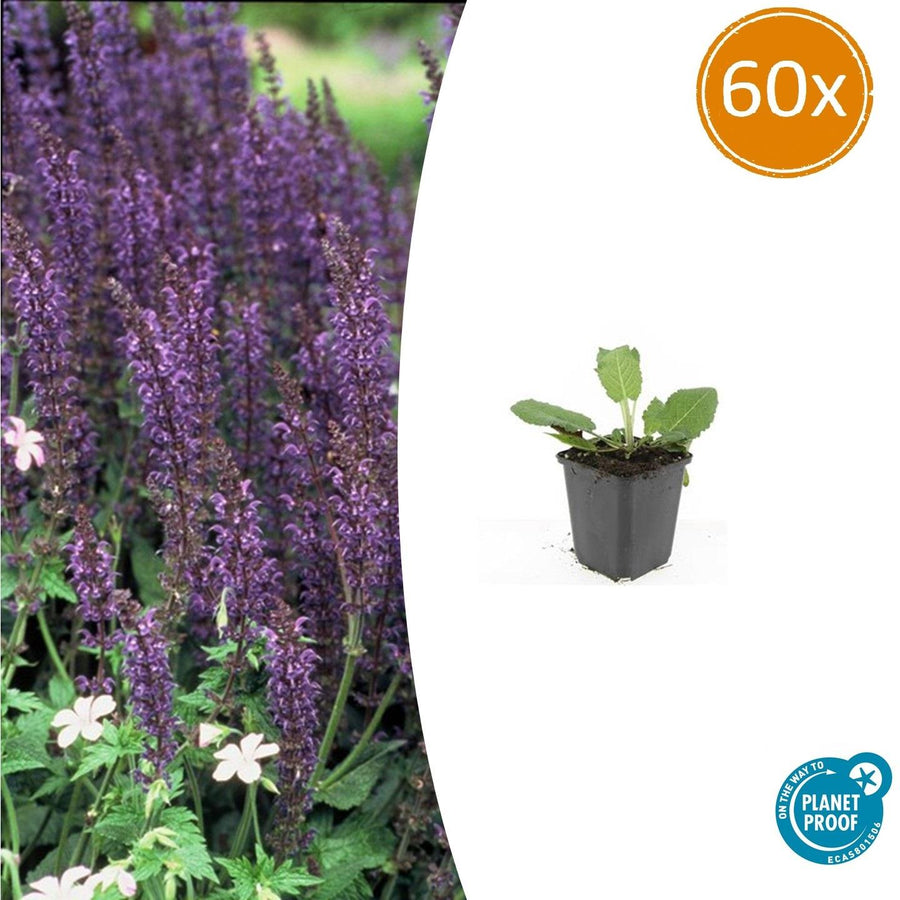
Hardy salvia (Salvia nemorosa, also called woodland sage or ornamental sage) is a compact perennial that sends up dense spikes of violet-blue flowers from early summer and repeats if cut back. It is loved by bees, copes with dry spells, and needs little care in a sunny border. Free delivery to 25 EU countries, usually 5–8 working days.




Which salvia should you choose?
| Plant | Look and size | Good for |
|---|---|---|
| 'Caradonna' | Dark purple-black stems with violet-blue flowers; about 50 to 60 cm | Striking vertical accent in a border |
| 'Mainacht' ('May Night') | Deep indigo-violet flowers from late spring; about 60 cm | Earliest to flower, good for pollinators |
| 'Ostfriesland' ('East Friesland') | Rich violet-purple spikes on a compact plant; about 45 cm | Front of a border and edging |
| 'Schneehügel' | White flower spikes | Cooling white in a mixed colour scheme |
Stock changes through the year; this page lists only the lines available now.
Where does hardy salvia grow best?
Hardy salvia grows best in full sun in free-draining soil and is drought tolerant once established. It suits sunny borders, gravel beds and dry banks, and combines well with grasses, roses and catmint. It dislikes wet, heavy soil in winter.
How do you plant and care for hardy salvia?
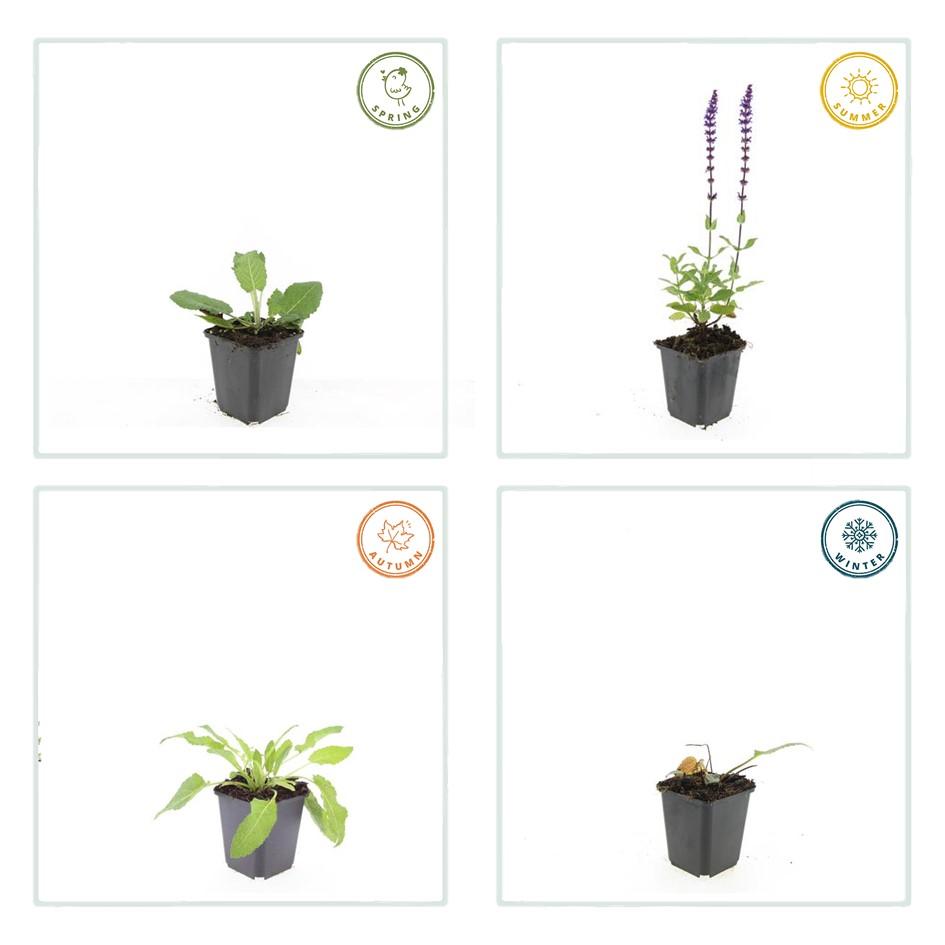
Plant 30 to 45 cm apart in spring or autumn and water until established. Cut off the faded flower spikes after the first flowering, just above the lowest leaves, and the plant will bloom again later in summer. Cut back old stems in early spring. Use our plant quantity calculator to work out numbers for a border.
Frequently asked questions
Is Salvia nemorosa hardy?
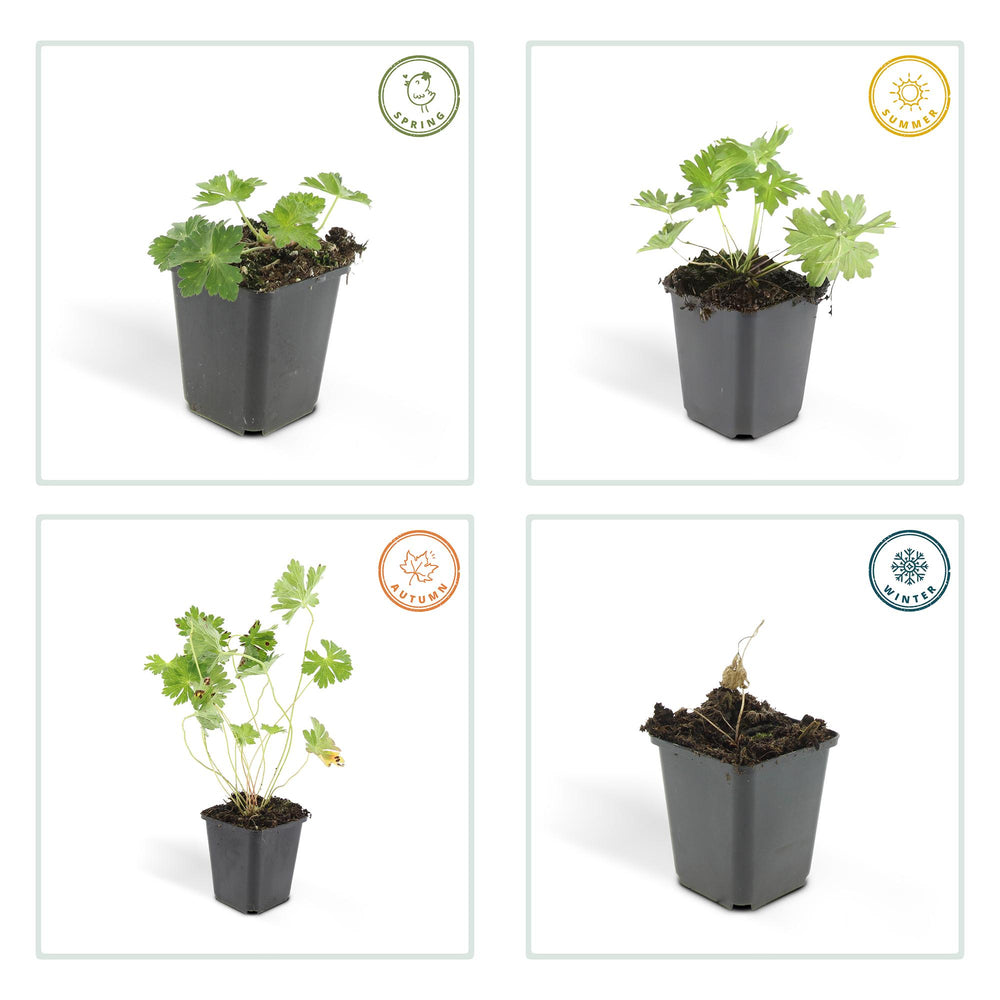
Yes. It is a fully hardy perennial that dies back in winter and regrows in spring.
When does salvia nemorosa flower?
From late spring or early summer, and again later in summer if the first flower spikes are cut back.
Does salvia need full sun?
It flowers best in full sun. In part shade it grows taller and flowers less.
More perennials: hardy perennials, pollinator-friendly plants and bulk groundcover packs. To work out how many plants you need, use our plant quantity calculator.