



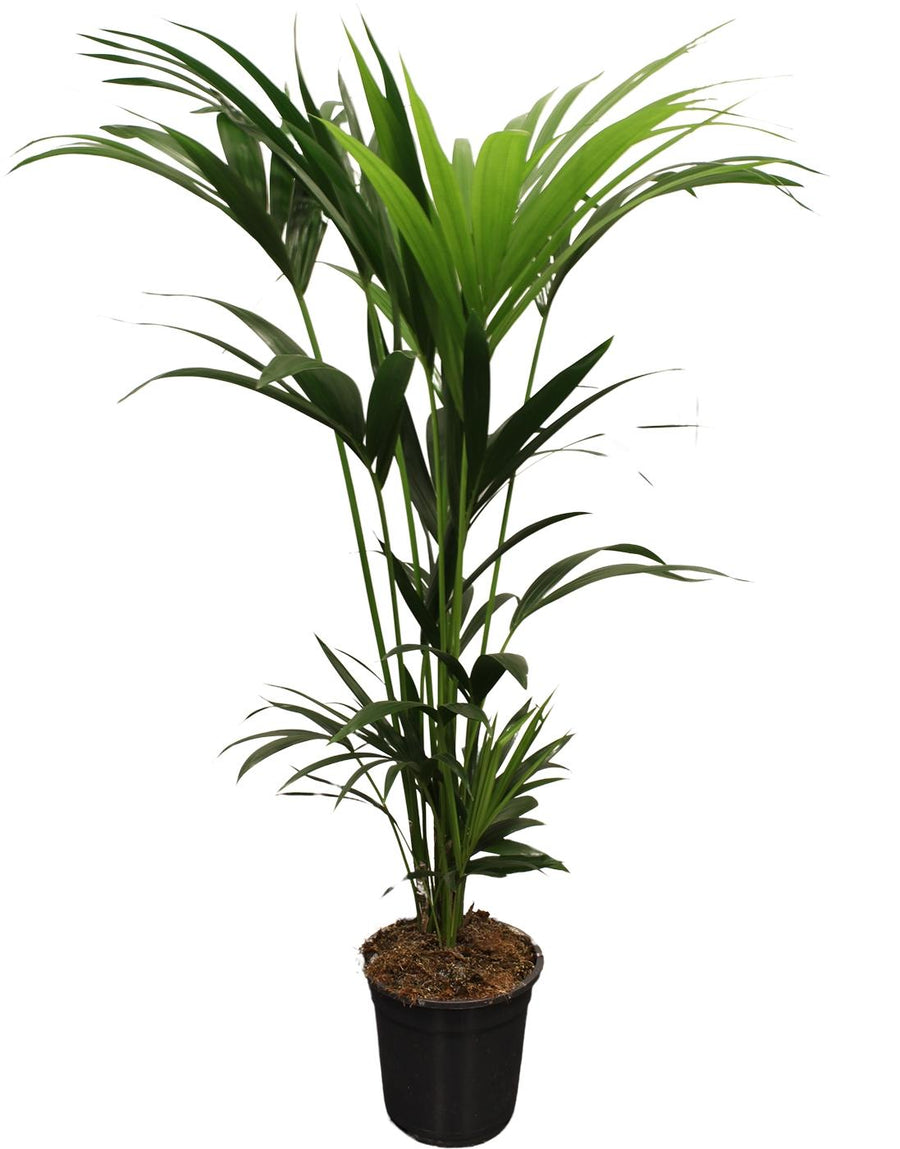
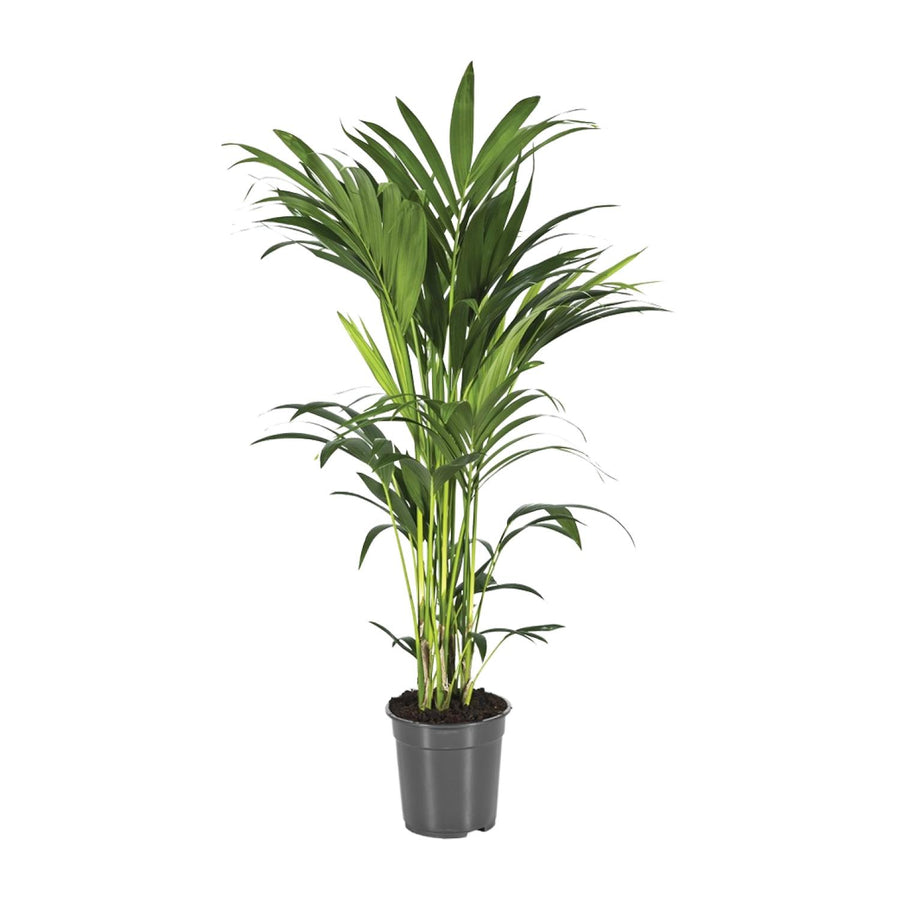
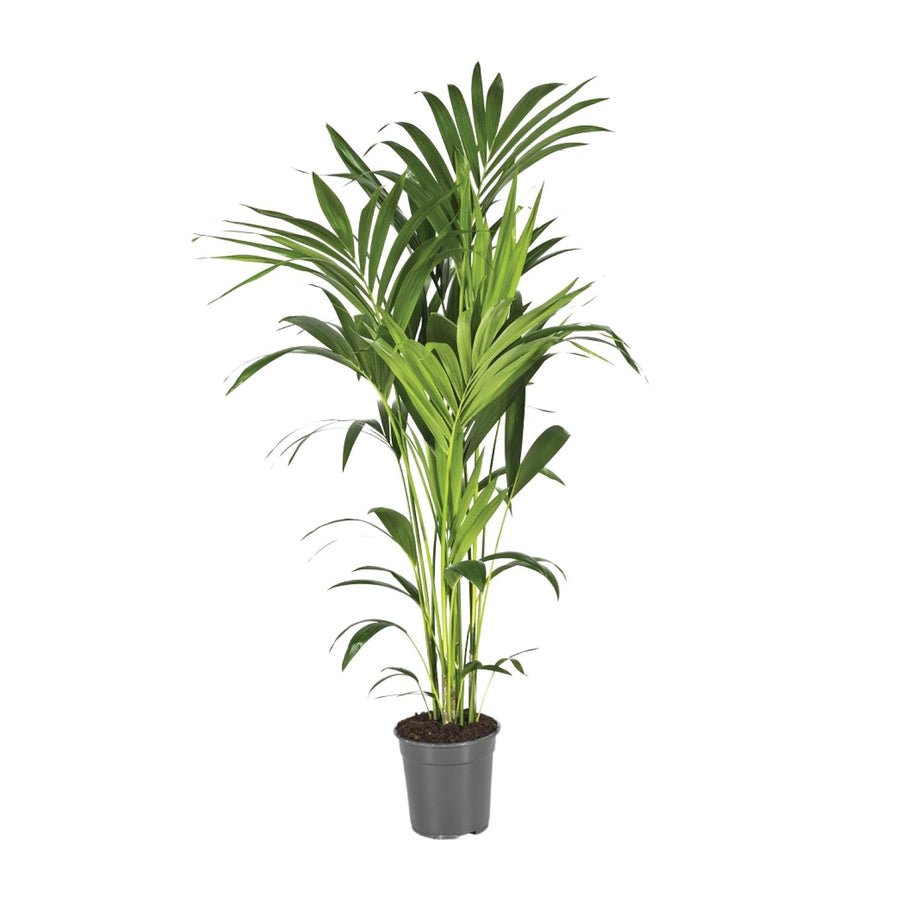
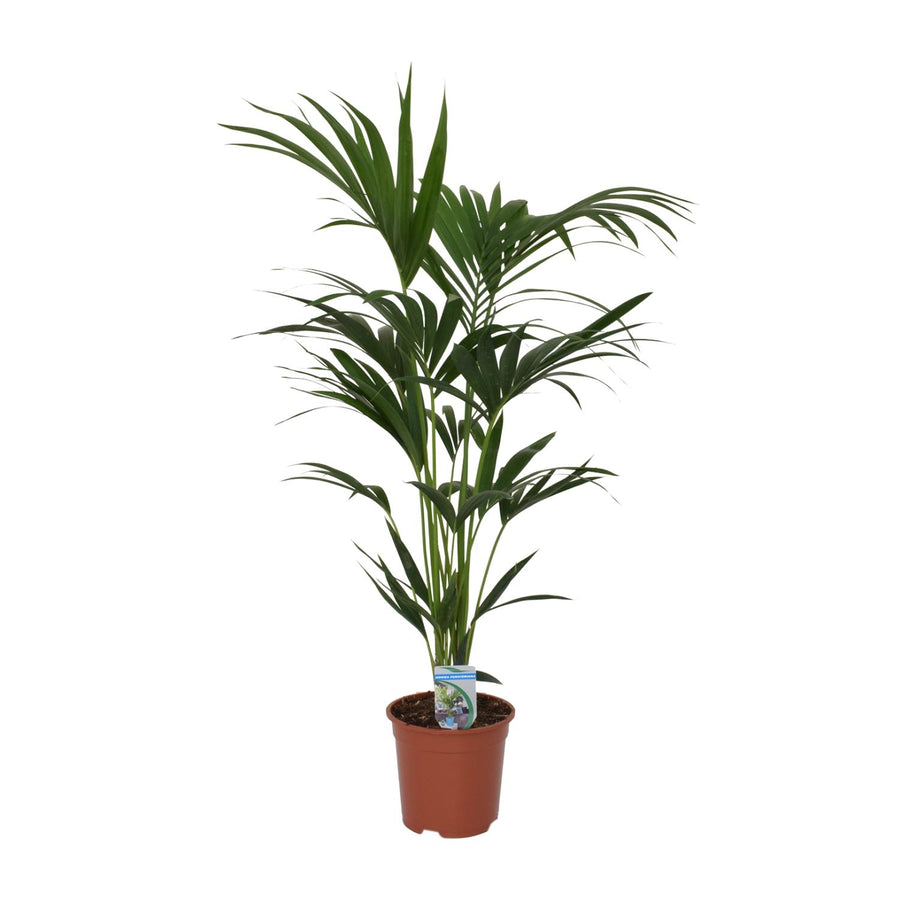
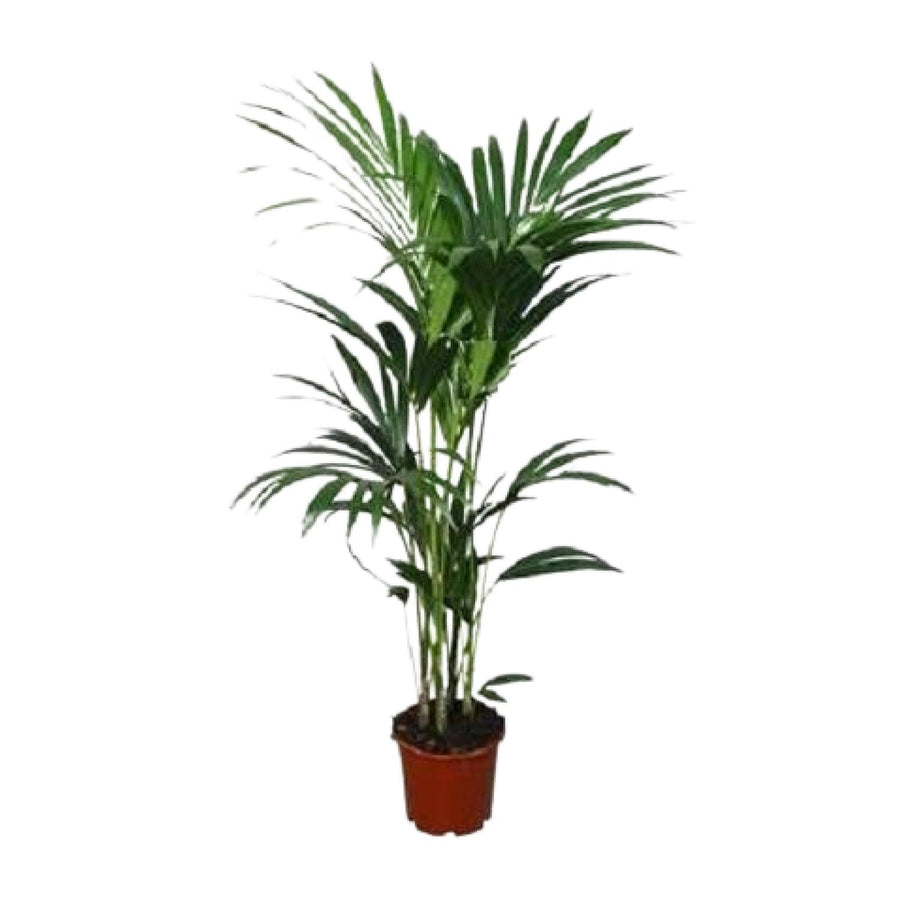
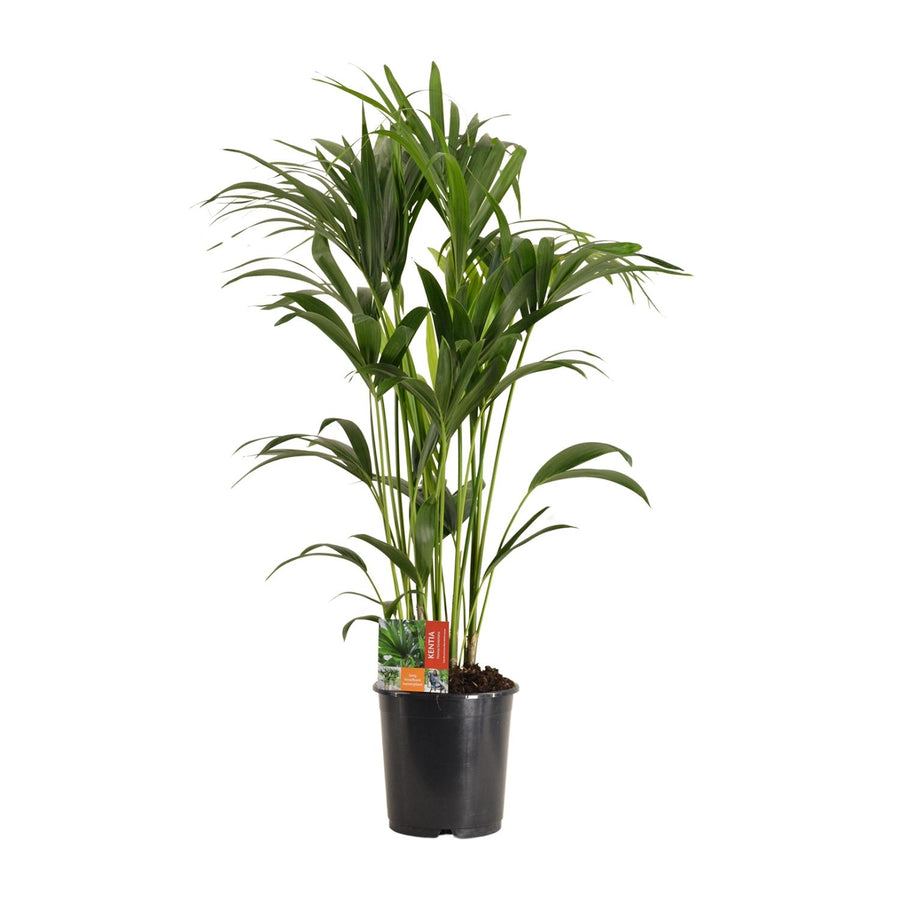
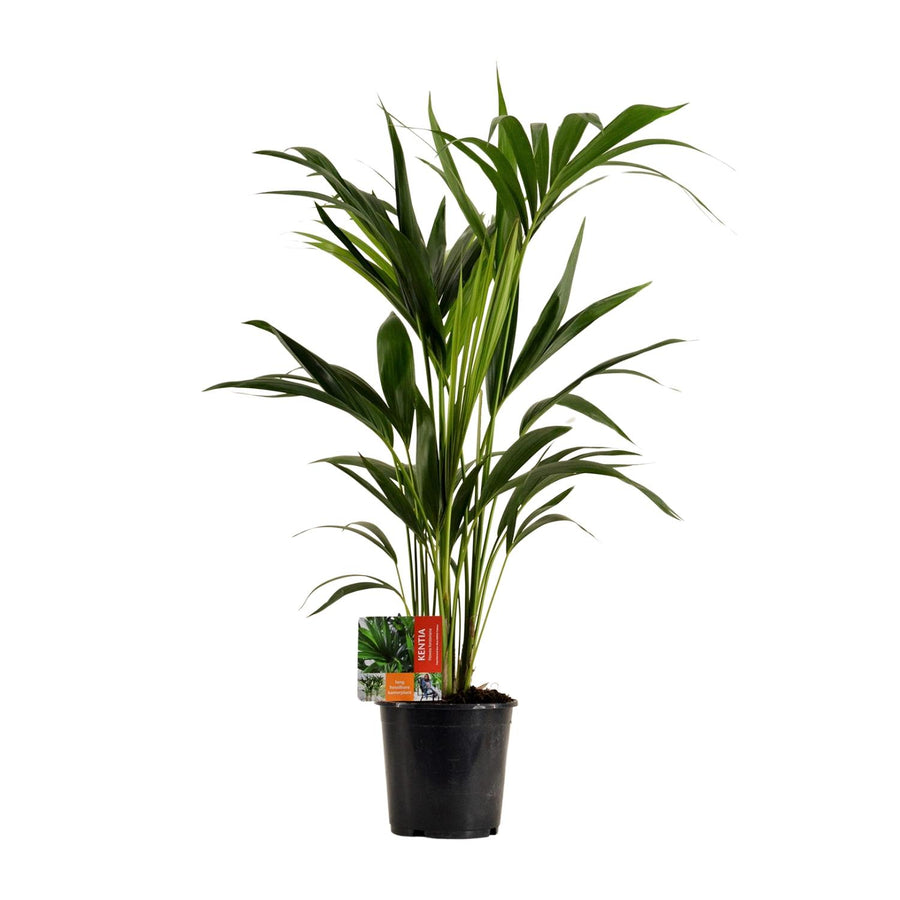
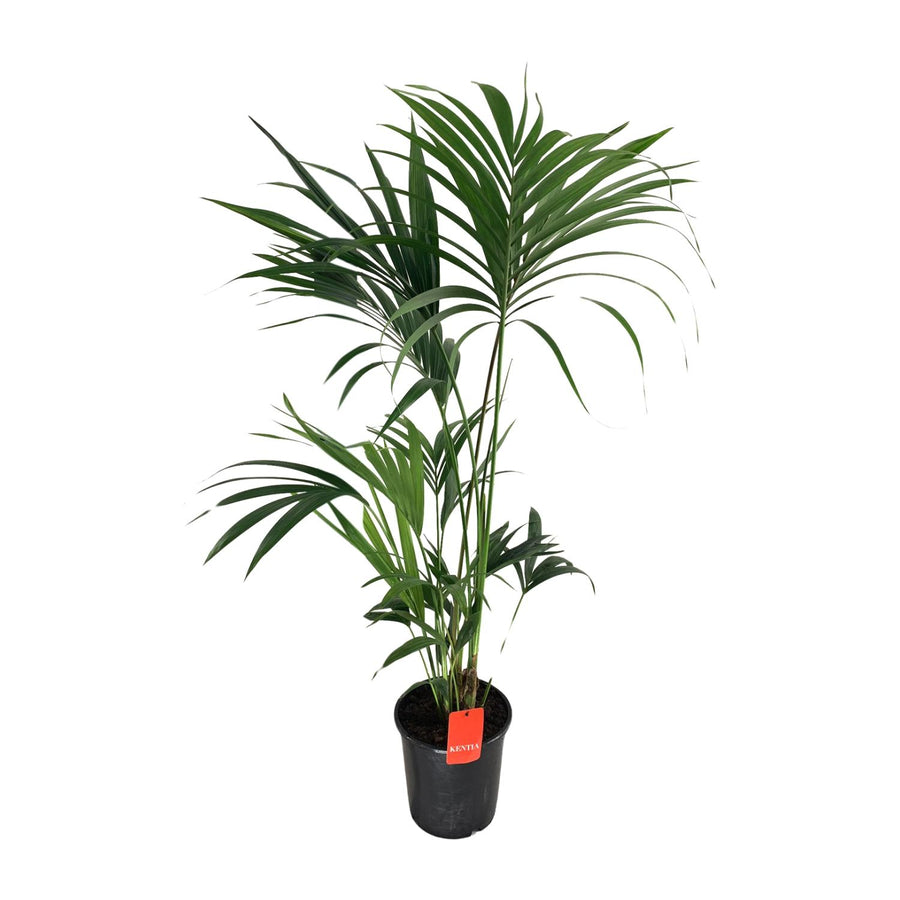
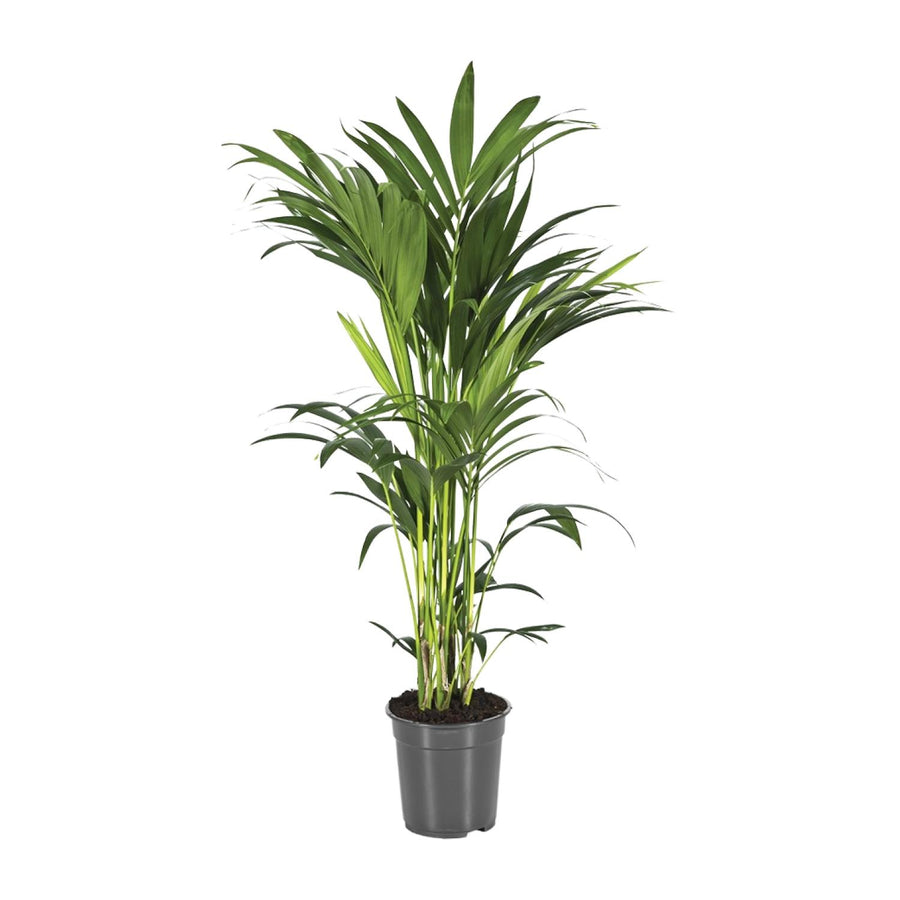
The Kentia palm (Howea forsteriana) is a slow-growing, shade-tolerant indoor palm with arching dark green fronds, suited to living rooms, hallways, offices and reception areas. Free tracked delivery across Ireland and 24 more EU countries.





Why choose a Kentia palm?
The Kentia palm is one of the few large indoor palms that copes well away from a sunny window. Native to Lord Howe Island in the Pacific, it grows naturally under a forest canopy, so it tolerates low to medium light, dry indoor air and the occasional missed watering. It is also listed as non-toxic to cats and dogs by the ASPCA, which makes it a safe statement plant for homes with pets.
| Size | Plant | Best for | Look |
|---|---|---|---|
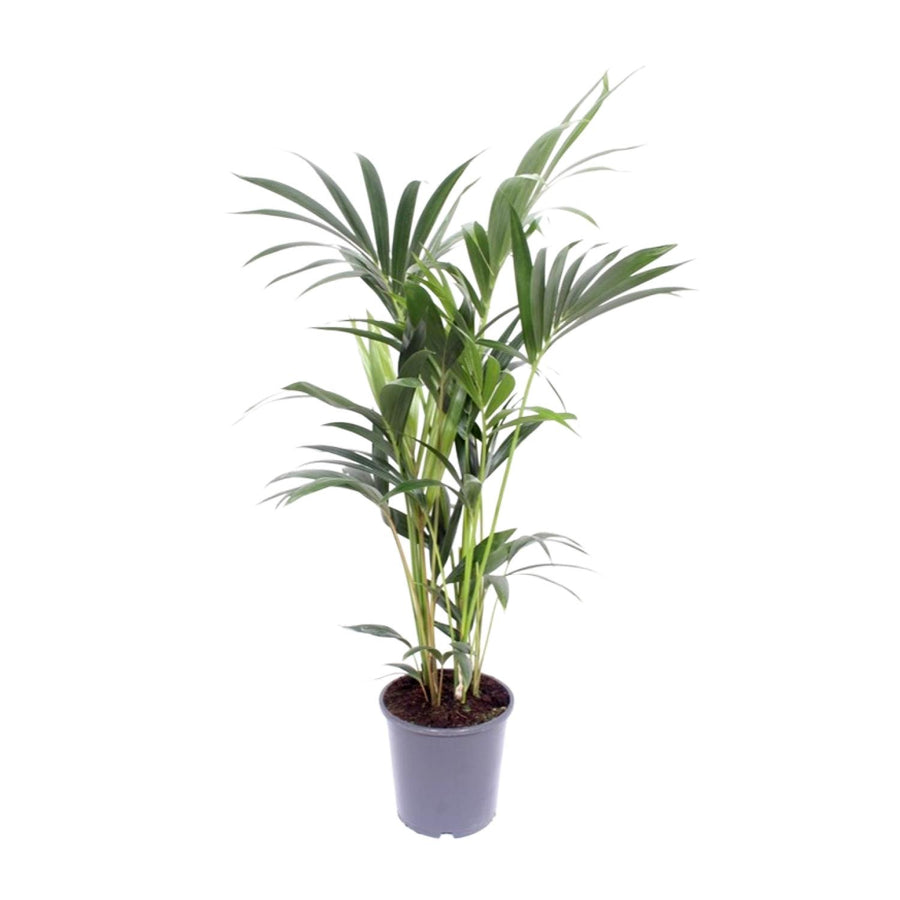
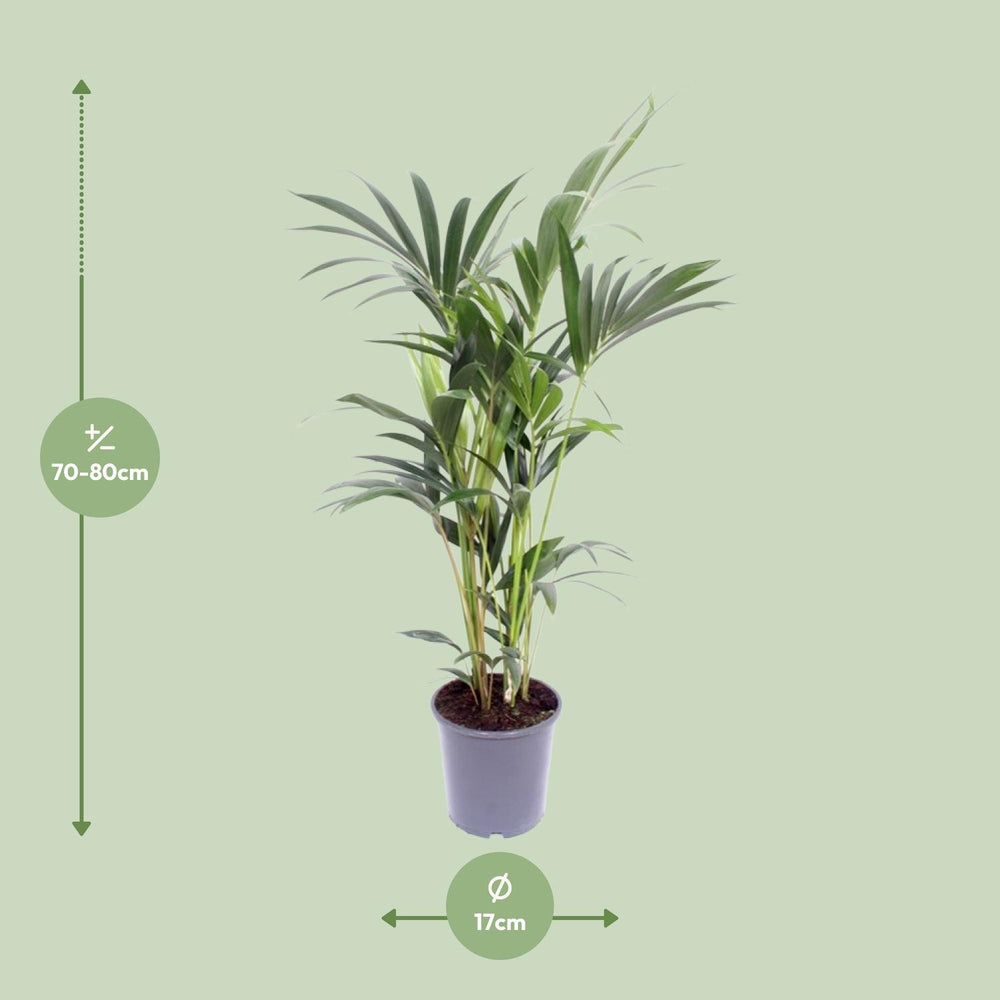
| 75cm | Howea forsteriana | Side tables, bedrooms, small flats | Compact, a handful of fronds |
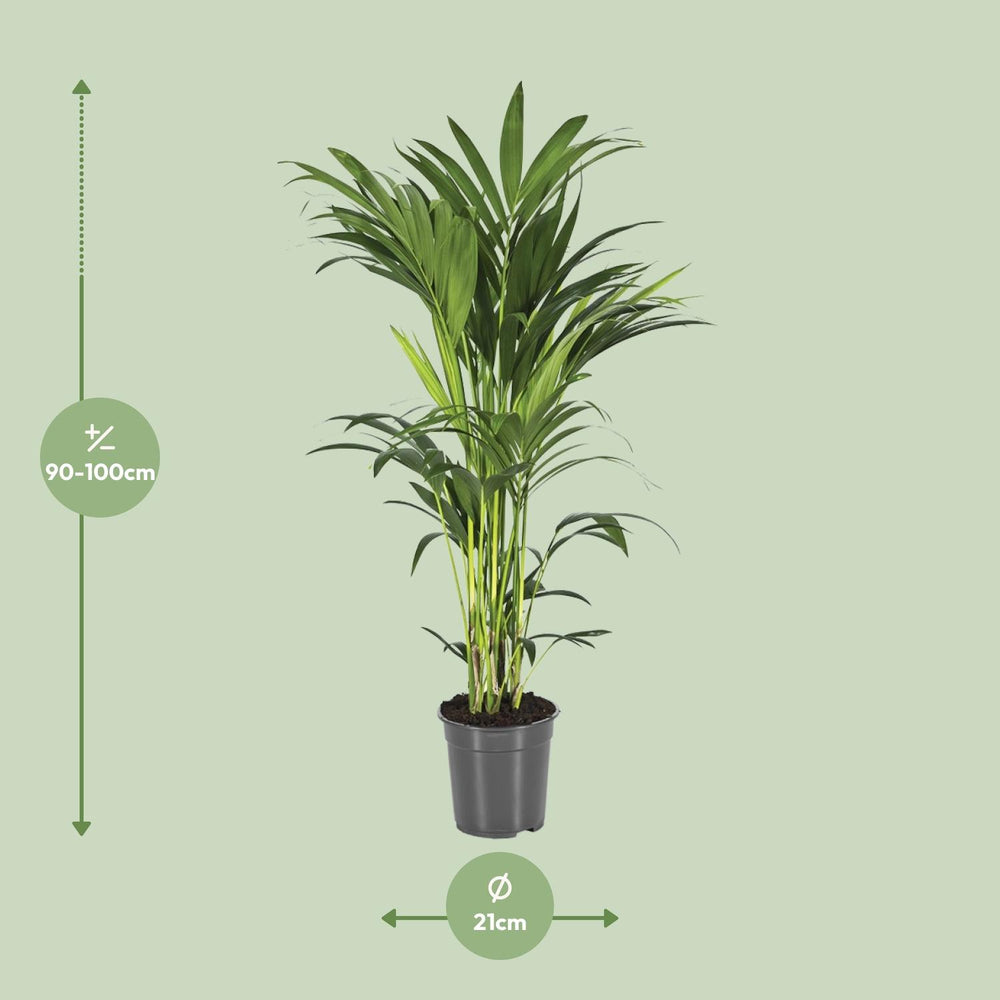
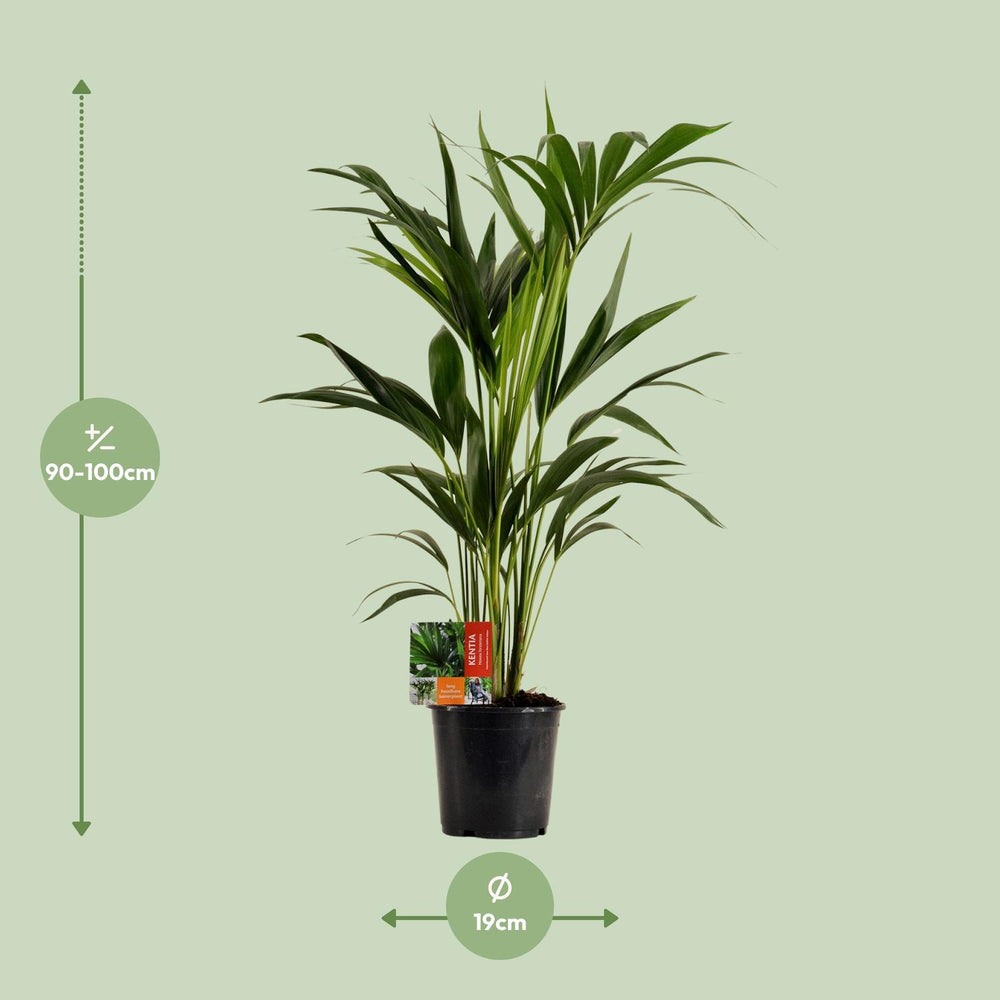
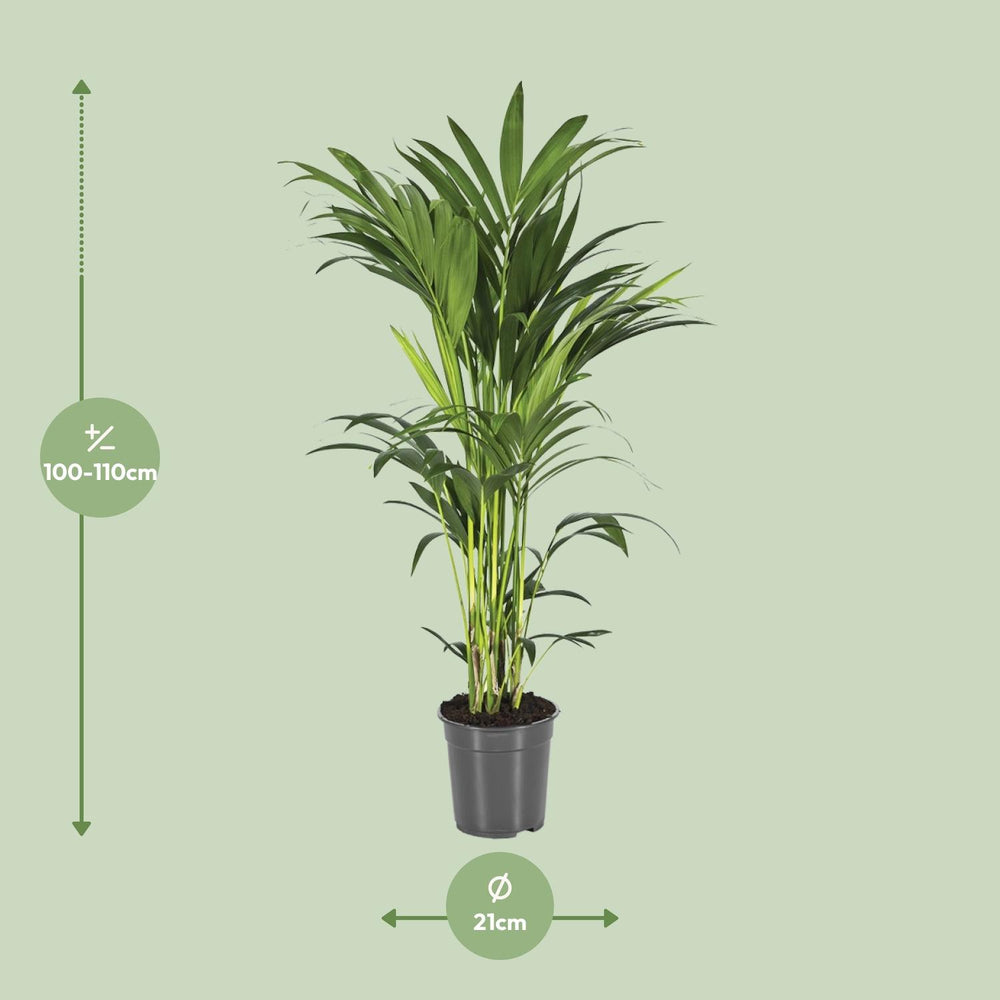
| 100cm | Howea forsteriana | Living room corners, home offices | Classic arching shape |
| 100cm, multi-stem | Howea forsteriana (5 stems per pot) | Where you want a fuller, bushier palm | Dense, more fronds from the base |
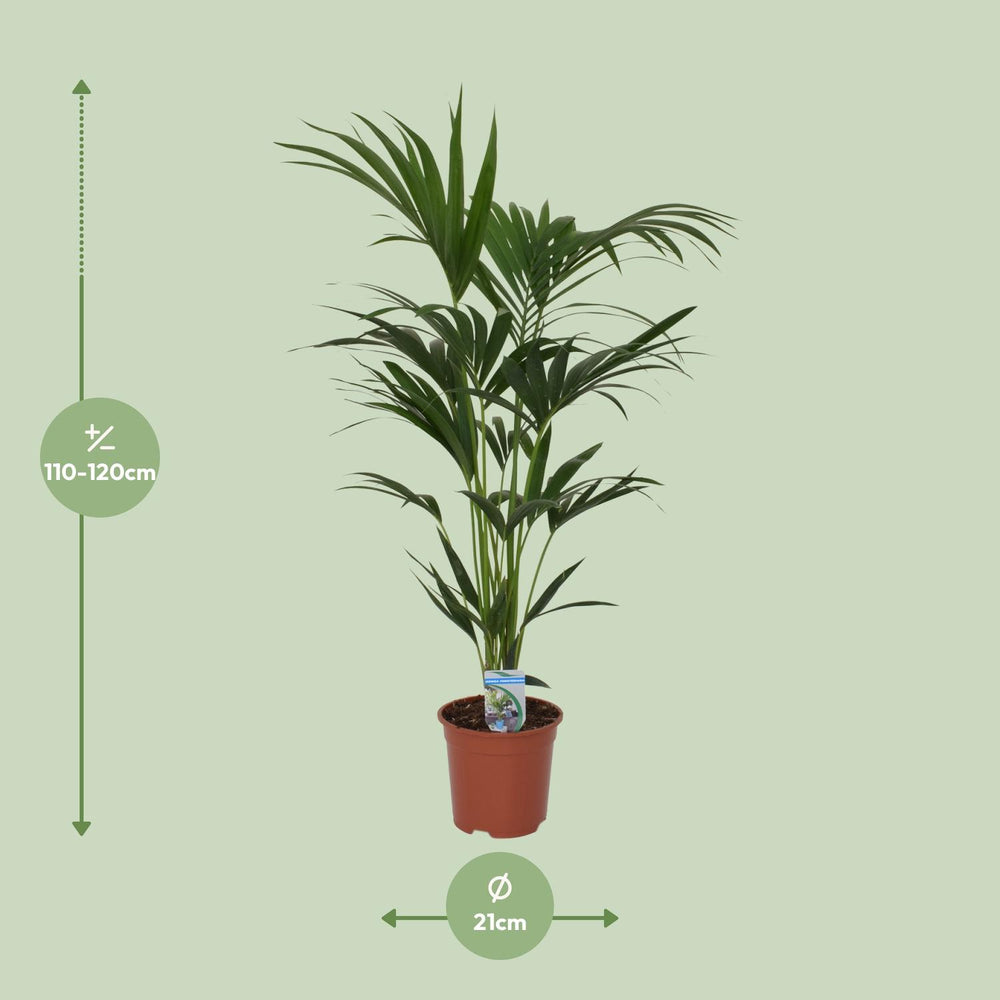
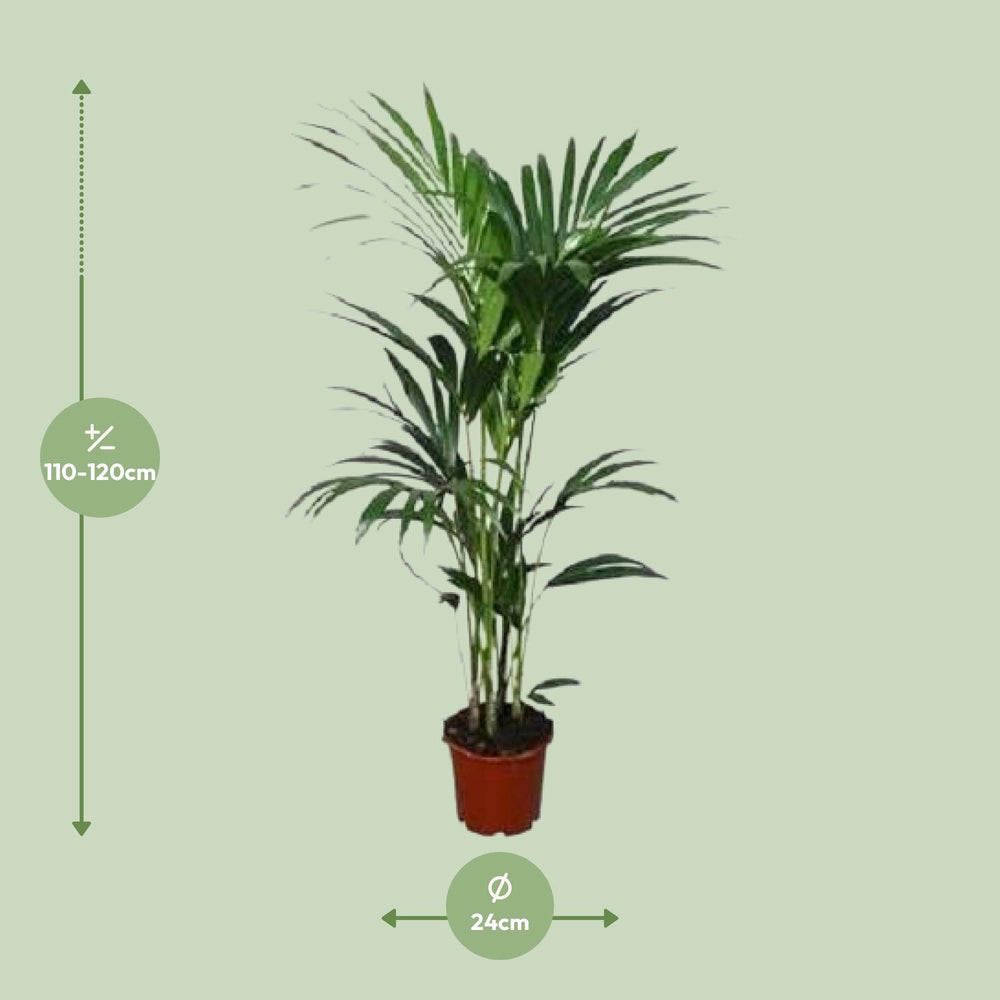
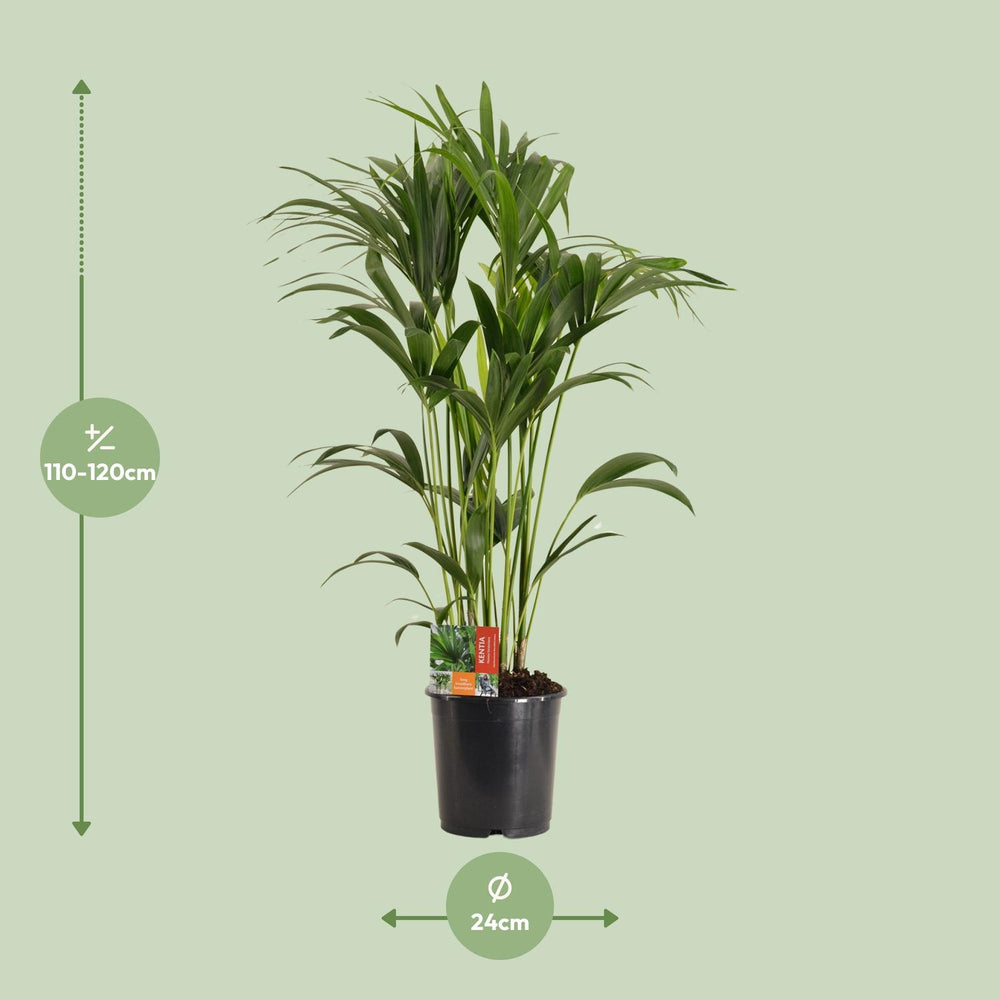
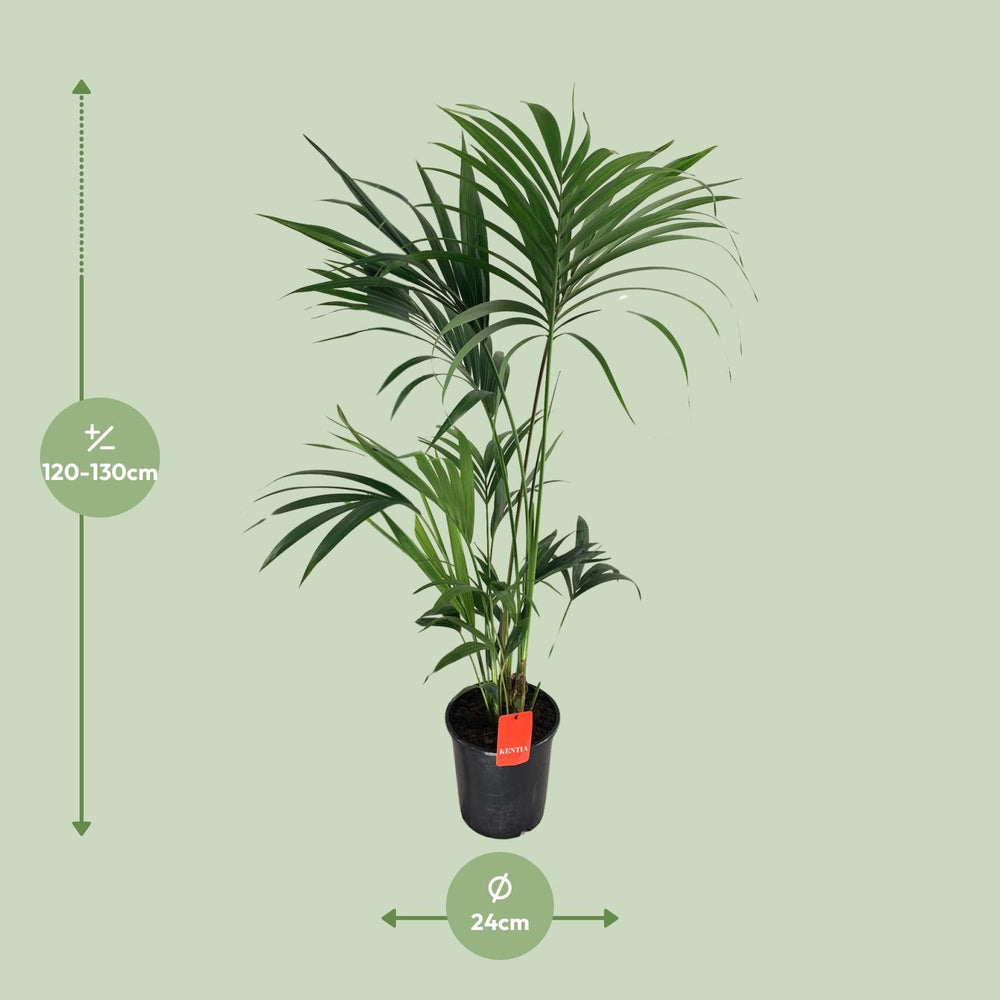
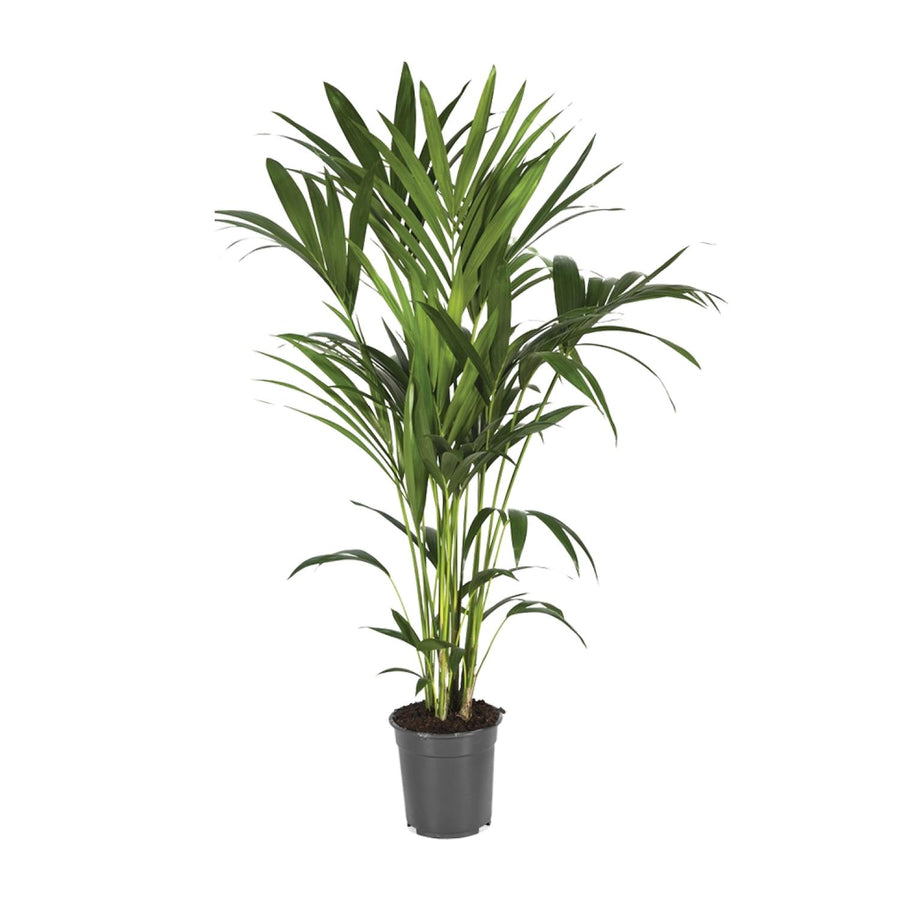
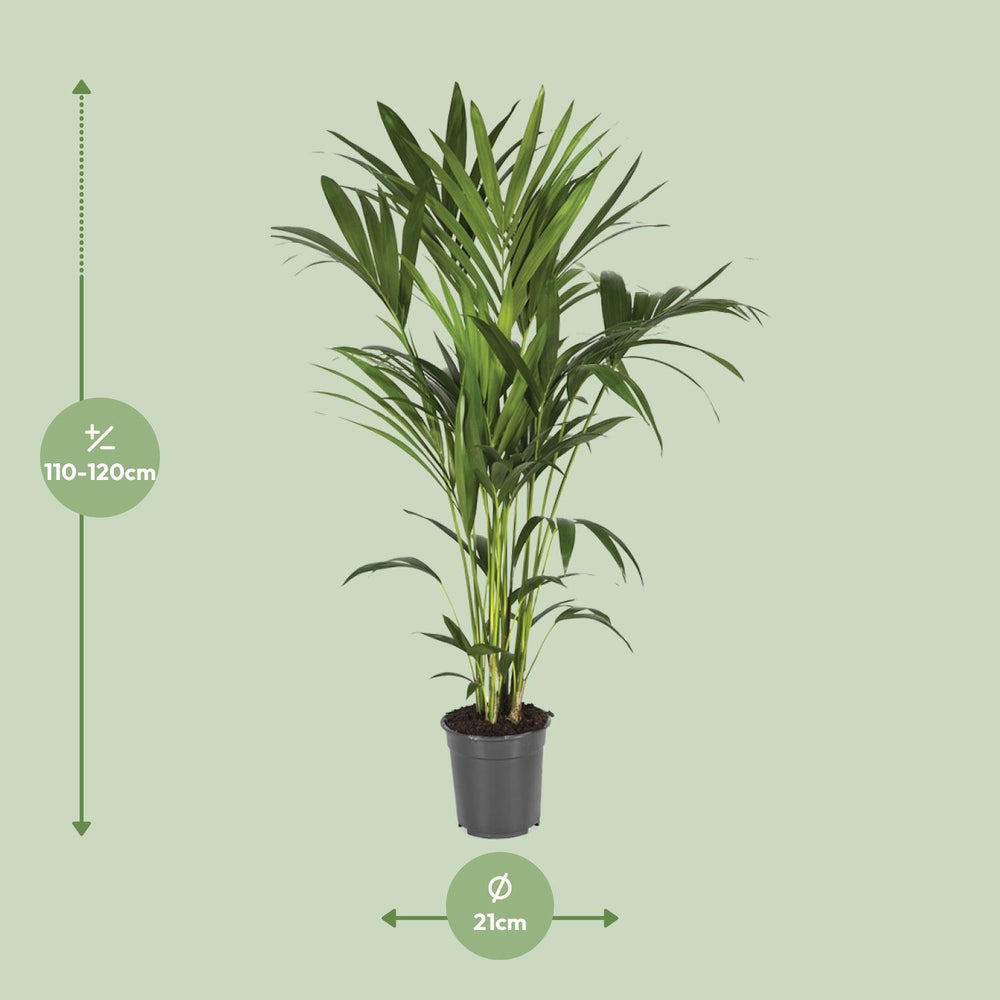
| 110–120cm | Howea forsteriana | Hallways, beside a sofa, meeting rooms | Tall and airy |
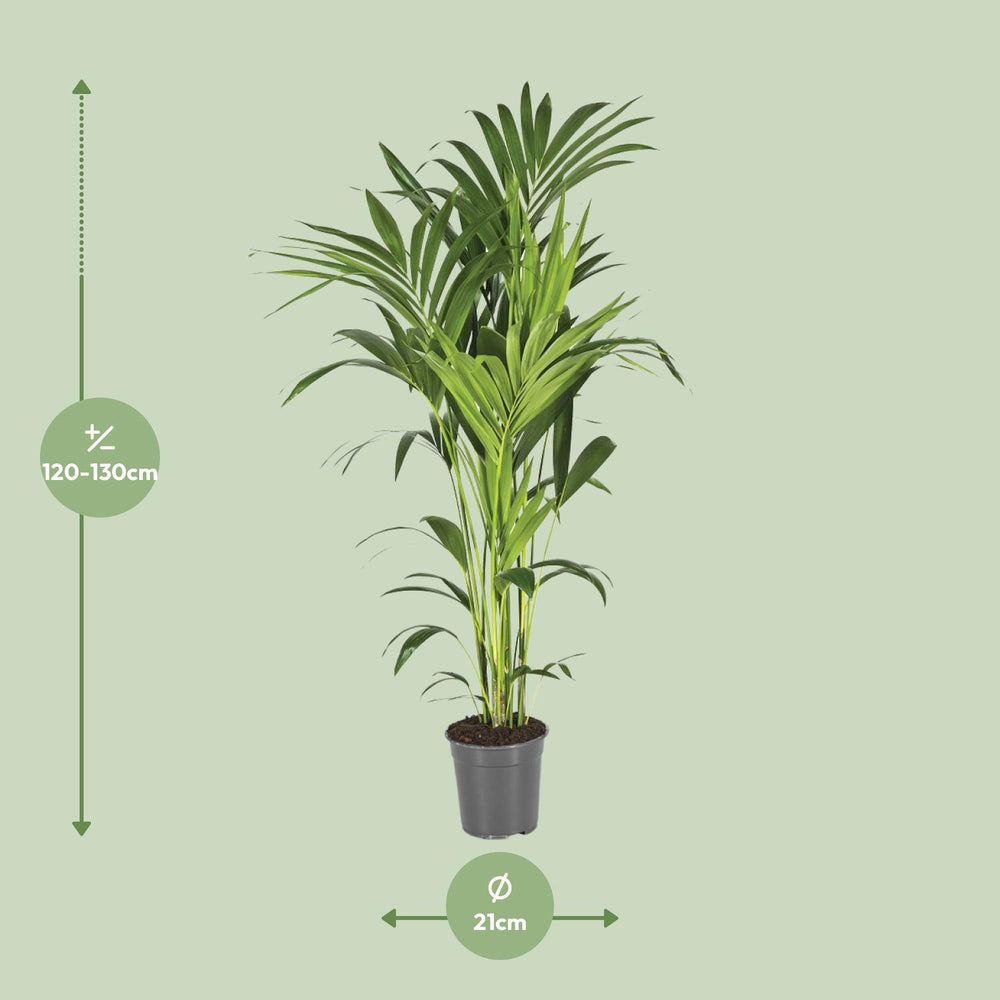
| 130cm | Howea forsteriana | Reception areas, open-plan rooms | Floor-standing statement |
How to care for a Kentia palm
Place it in bright, indirect light or a shadier spot a few metres from the window, and keep it out of strong summer sun, which scorches the fronds. Water when the top few centimetres of compost feel dry, and empty any water left in the saucer: soggy roots are the main thing that harms a Kentia. In winter, water less often. Keep it above about 10°C and away from radiators and cold draughts. Feed monthly in spring and summer with a diluted liquid feed.
What to expect as it grows
Kentias grow slowly, usually producing only a few new fronds a year, so the size you buy is close to the size you will live with for some time. That slow pace is part of the appeal: it rarely needs repotting, every two to three years is enough, and it holds its shape without pruning. Simply cut off any lower fronds that turn fully brown.
Frequently asked questions
Is a Kentia palm safe for cats and dogs?
Yes. Howea forsteriana is listed as non-toxic to cats and dogs by the ASPCA. Chewed fronds can still upset a sensitive stomach, so discourage nibbling.
Why are the tips of my Kentia palm turning brown?
Brown tips are usually caused by dry air from heating, irregular watering or a build-up of salts in the compost. Water thoroughly when the top layer is dry, and occasionally flush the pot through with rainwater.
Can a Kentia palm live in a dark room?
It copes with low light better than almost any other palm, but it still needs daylight. A north-facing room or a spot a few metres from a window is fine; a room with no window is not.
Keep exploring: Palm plants · Pet-safe plants · Low light plants