

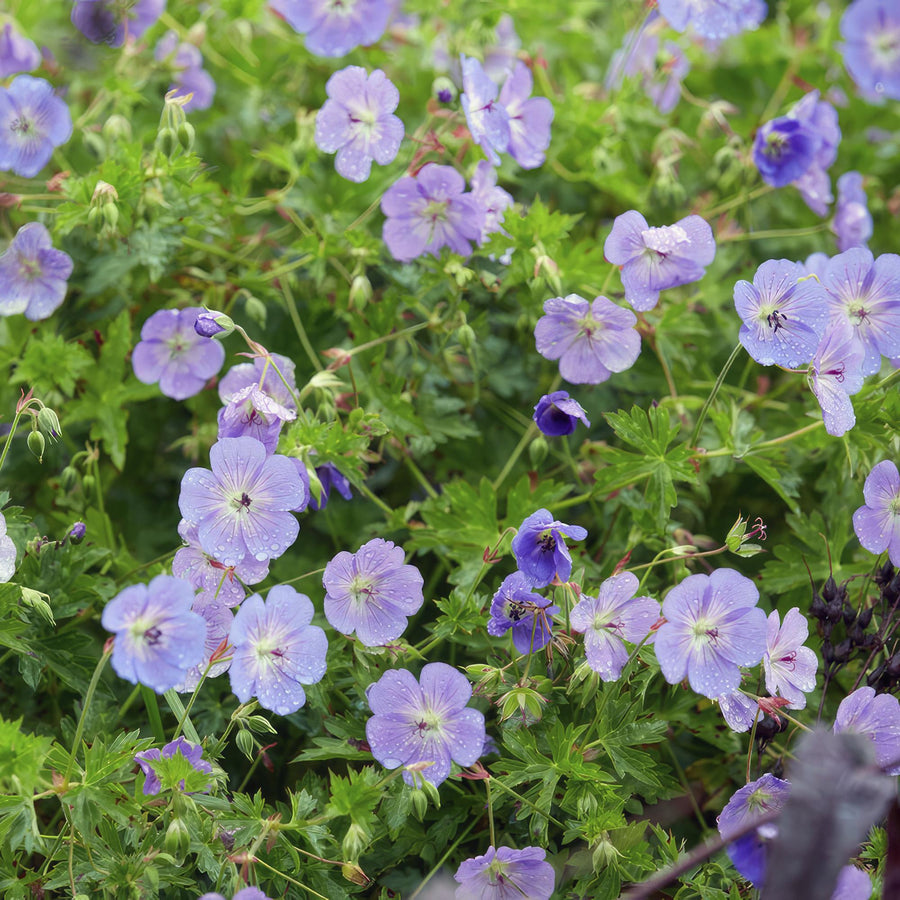


Catmint (Nepeta) is a tough, long-flowering perennial with aromatic grey-green leaves and clouds of lavender-blue flowers from early summer to autumn that bees and butterflies love. It thrives in full sun and poor, free-draining soil and needs very little care. Free delivery to 25 EU countries, usually 5–8 working days.


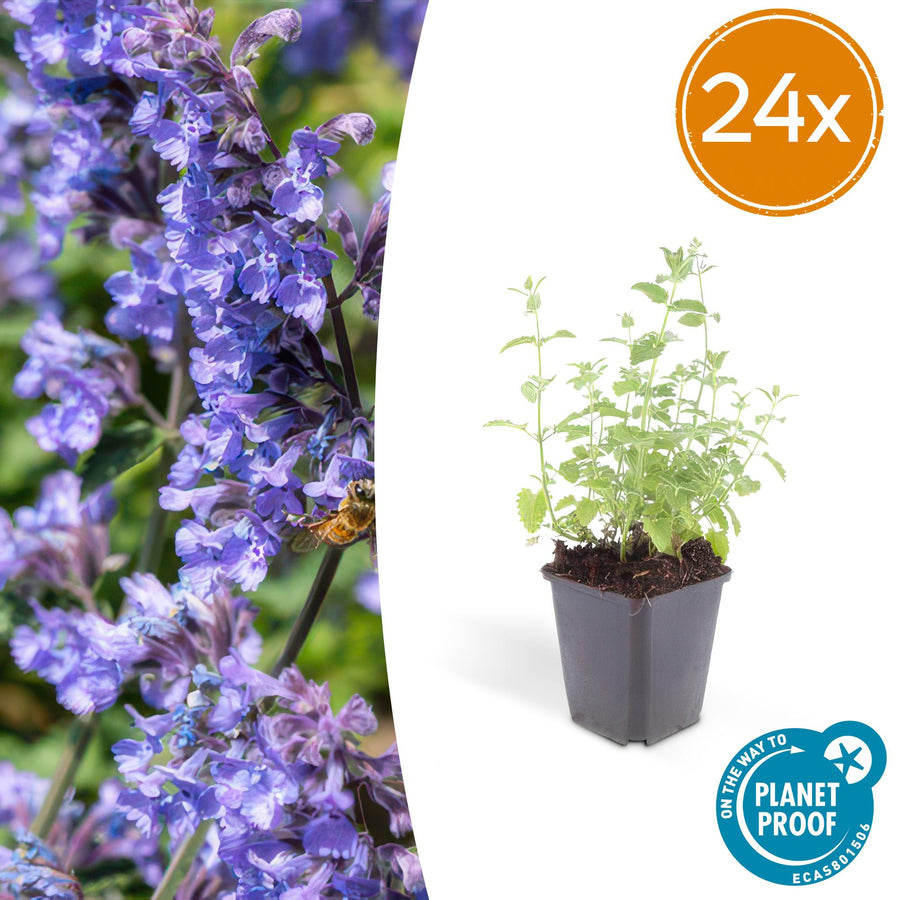
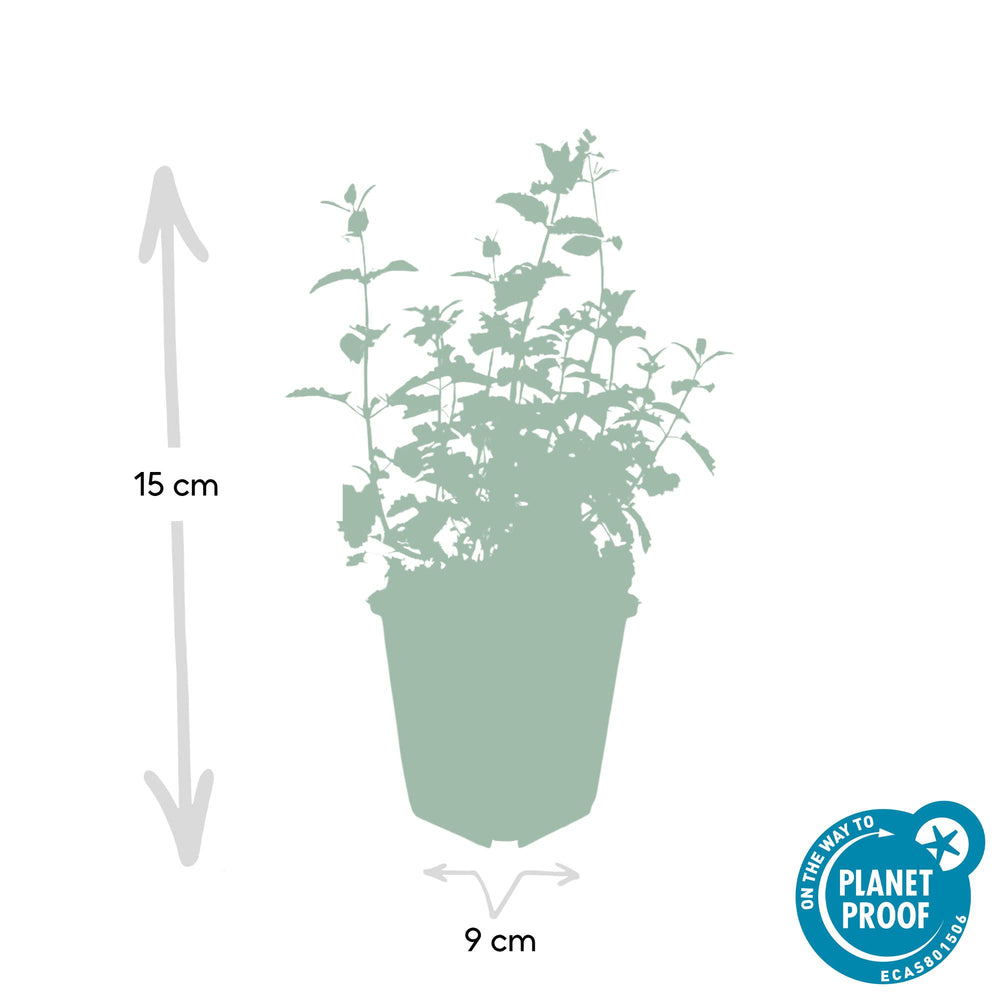


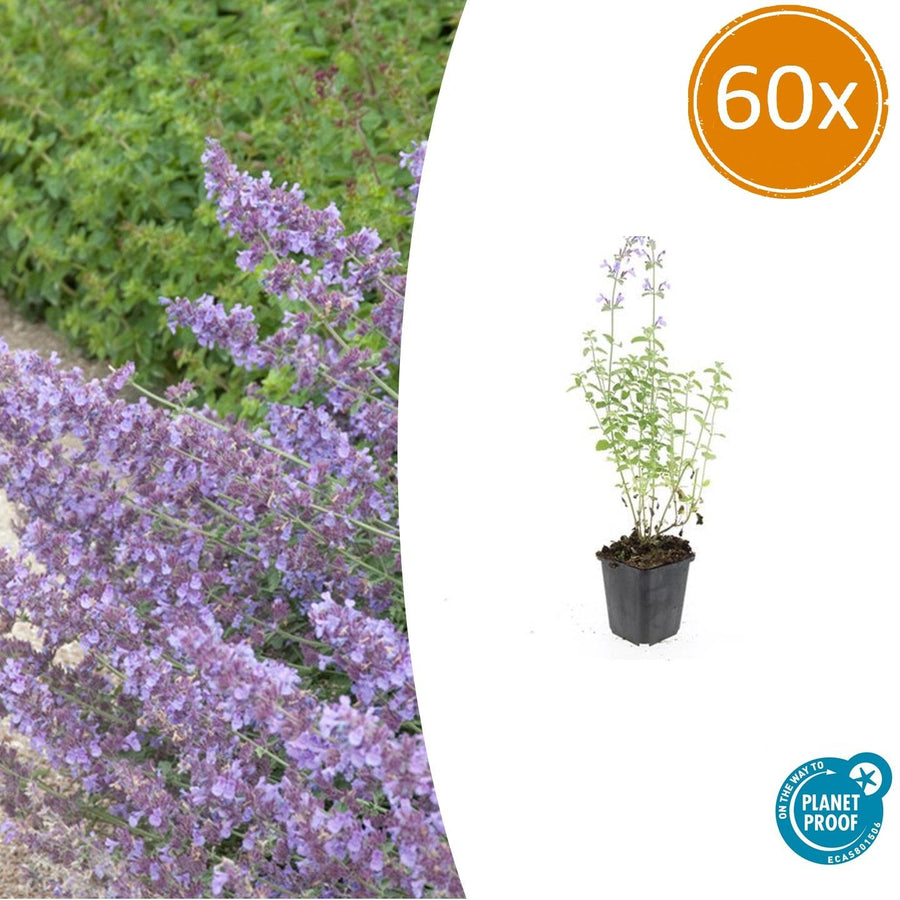
Which catmint should you choose?
| Plant | Look and size | Good for |
|---|---|---|
| 'Six Hills Giant' | Tall, arching, lilac-blue flower spikes, about 60 to 90 cm | Back of a border, around roses |
| 'Walker's Low' and 'Grog' (Nepeta racemosa) | Compact, lavender-blue, about 40 to 60 cm | Front of a border and edging paths |
| Nepeta x faassenii and 'Snowflake' | Fragrant grey-green foliage; blue or white flowers | Gravel gardens and sunny banks |
| Nepeta sibirica 'Wild Orchid' | Taller spikes of violet-blue flowers | Meadow-style and cottage planting |
| Calamintha nepeta (lesser calamint) | A related plant with mint-scented leaves and clouds of tiny pale flowers | Long flowering, small gardens and pots |
Stock changes through the year; this page lists only the lines available now.
Where does catmint grow best?
Catmint grows best in full sun in well-drained soil, including poor or stony ground, and is drought tolerant once established. It suits sunny borders, gravel beds and the edges of paths, where its scented leaves are brushed as you pass. Heavy, wet soil in winter is the main thing it dislikes.
How do you plant and care for catmint?
Plant 30 to 45 cm apart in spring or autumn. After the first flush of flowers fades, cut the plants back by about half to encourage a second flowering in late summer, and trim them back in early spring. Use our plant quantity calculator to work out numbers for a border.
Do cats like catmint?
The garden hybrids, such as Nepeta x faassenii and 'Six Hills Giant', are generally less attractive to cats than true catnip (Nepeta cataria), but some cats still like to roll in them. Protect young plants with a few twigs if cats are a problem.
Frequently asked questions
Is catmint a perennial?
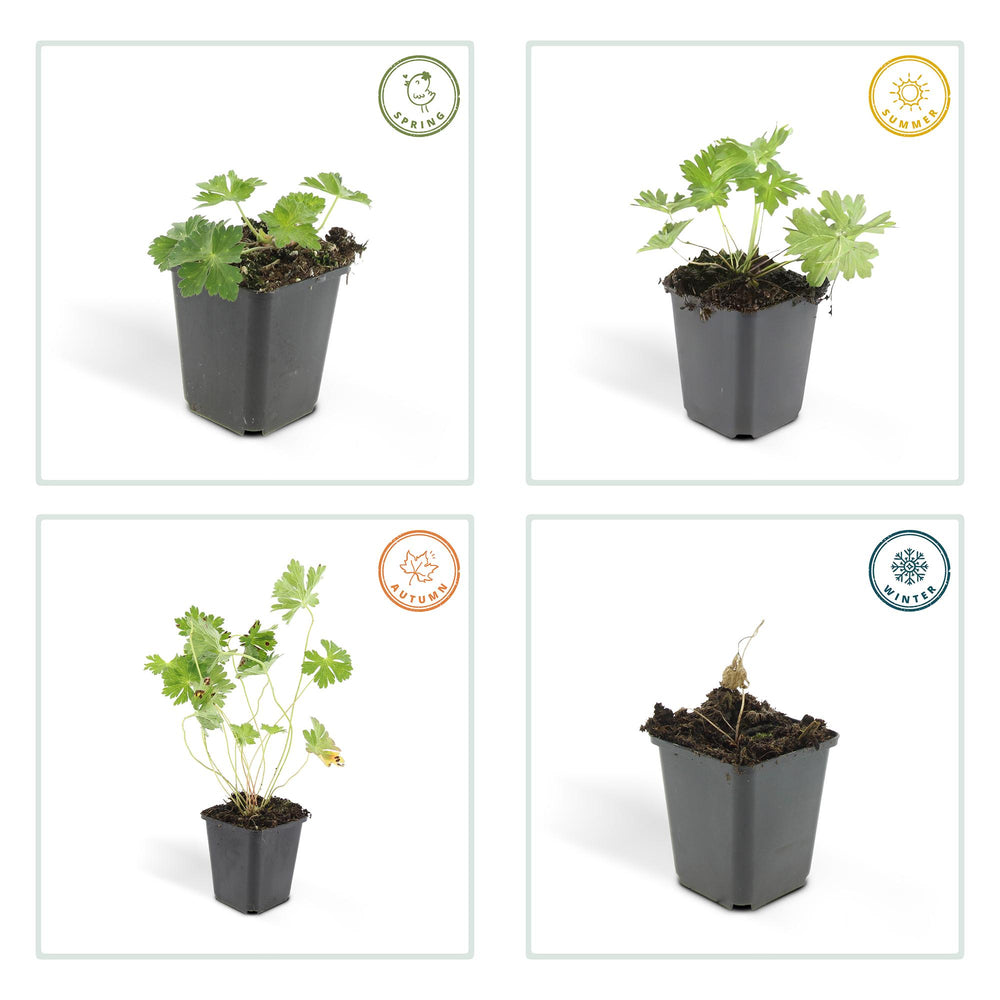
Yes. Catmint is a hardy herbaceous perennial that dies back in winter and returns each spring.
Does catmint spread?
Most garden catmints form clumps that widen slowly. They are not invasive, but they can self-seed in gravel.
When should I cut back catmint?
Cut it back by about half after the first flowers fade to encourage a second flush, and trim back old growth in early spring.
More perennials: hardy perennials, pollinator-friendly plants and bulk groundcover packs. To work out how many plants you need, use our plant quantity calculator.