



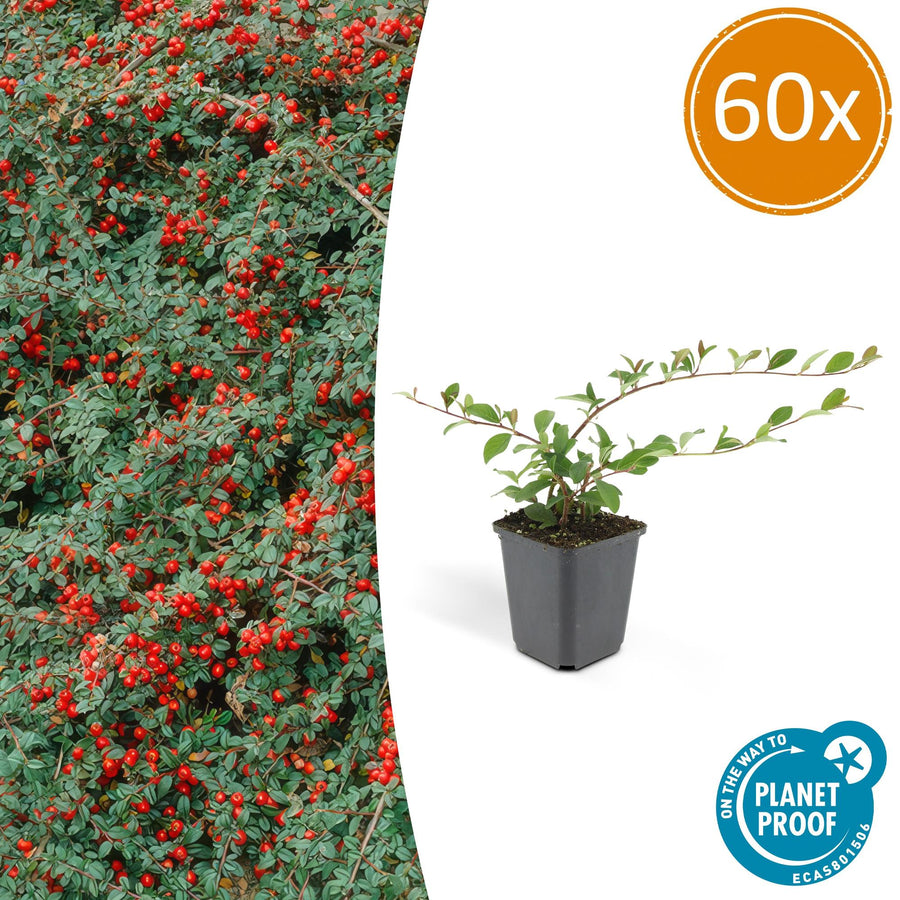
Cotoneaster ground cover plants are hardy, low-growing shrubs that spread into dense, weed-suppressing mats and carry white-pink spring flowers that bees visit, followed by red berries in autumn. The range includes Cotoneaster dammeri, 'Coral Beauty', 'Queen of Carpets', 'Streibs Findling' and Cotoneaster horizontalis. Free delivery to 25 EU countries, usually 5–8 working days.






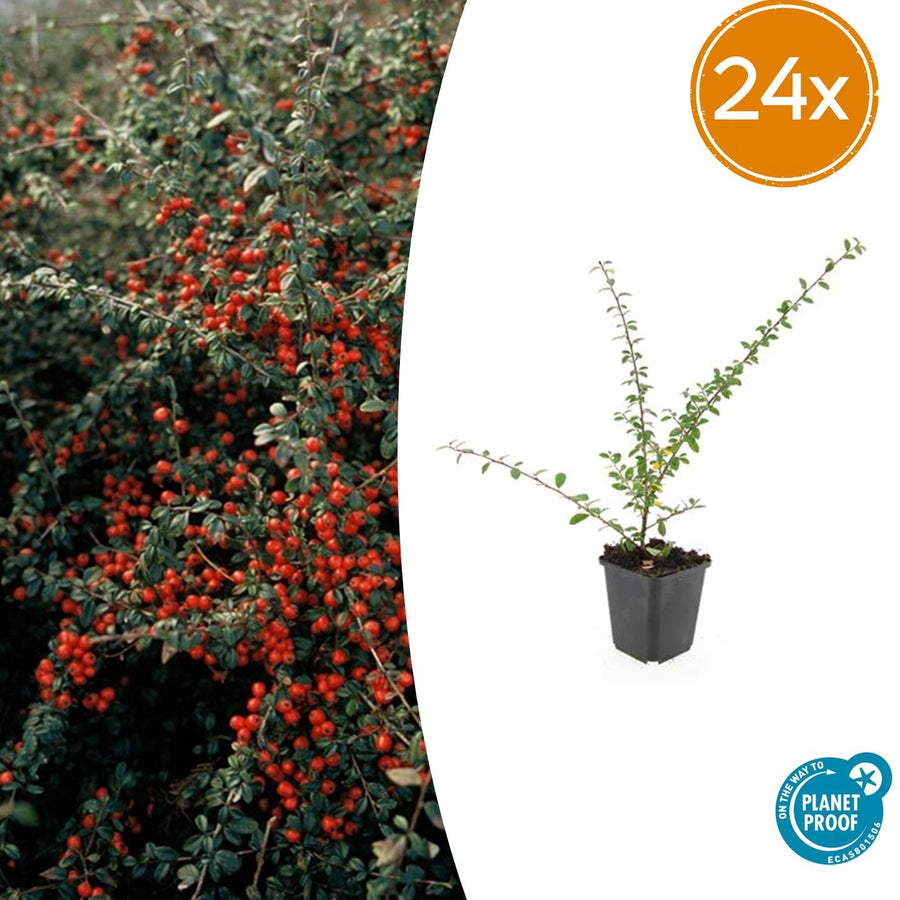
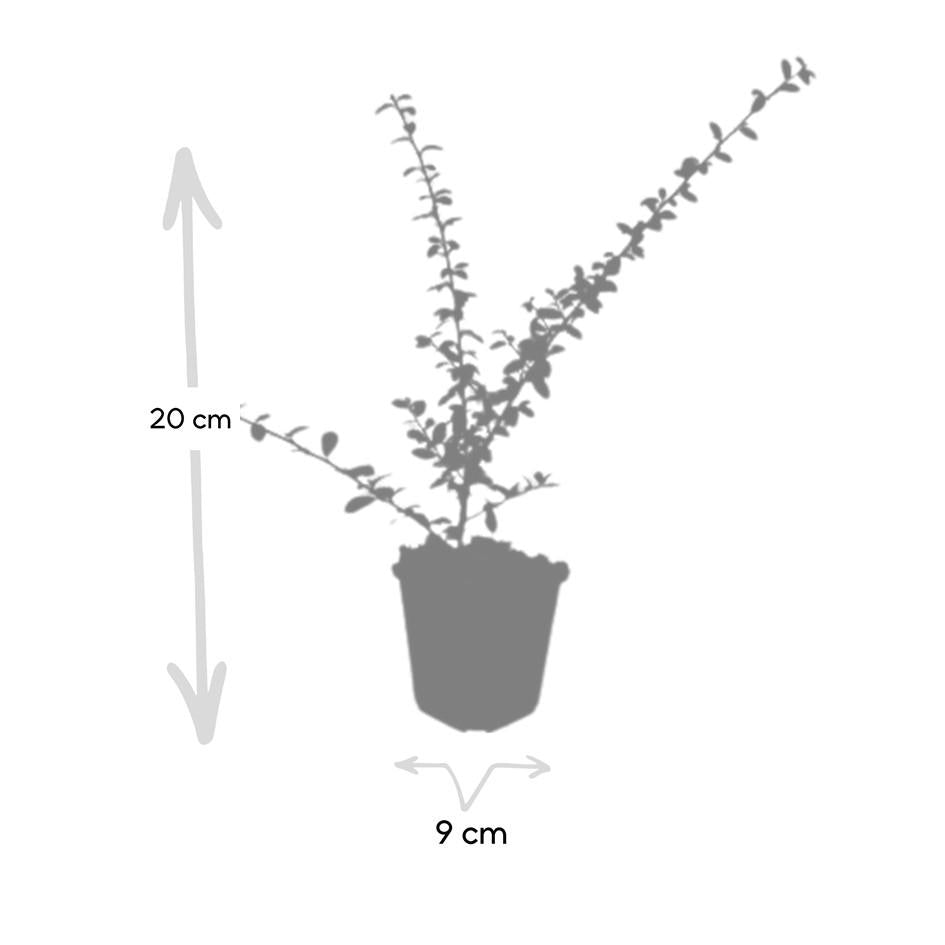
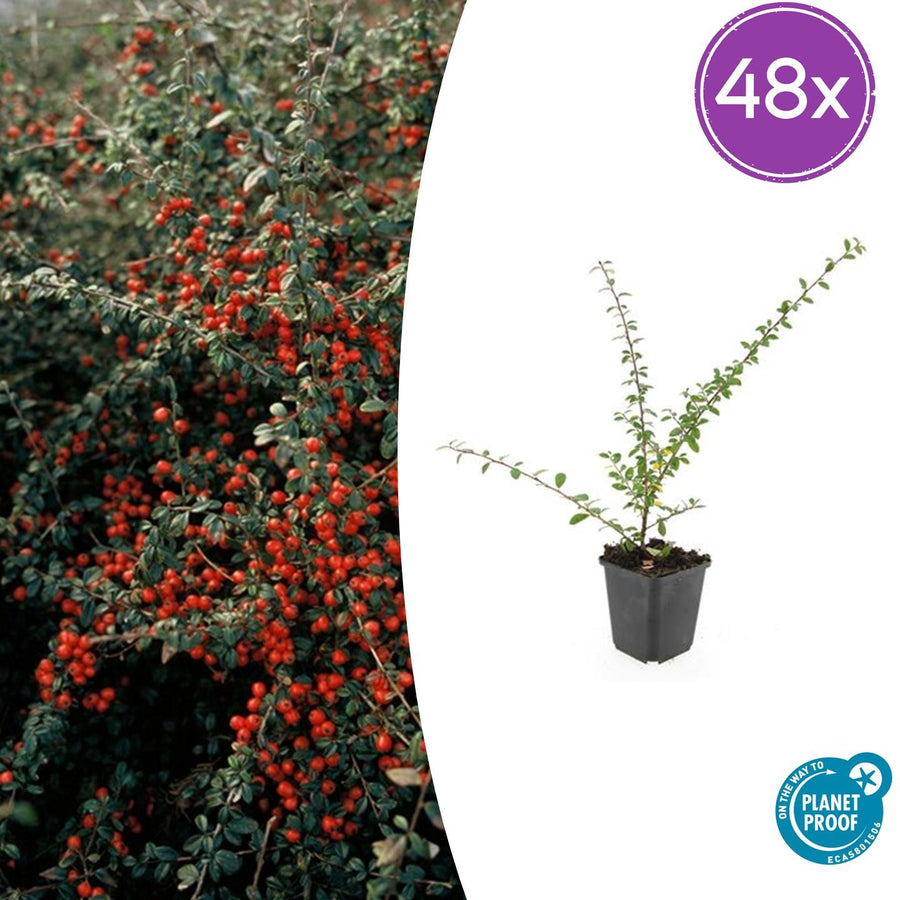
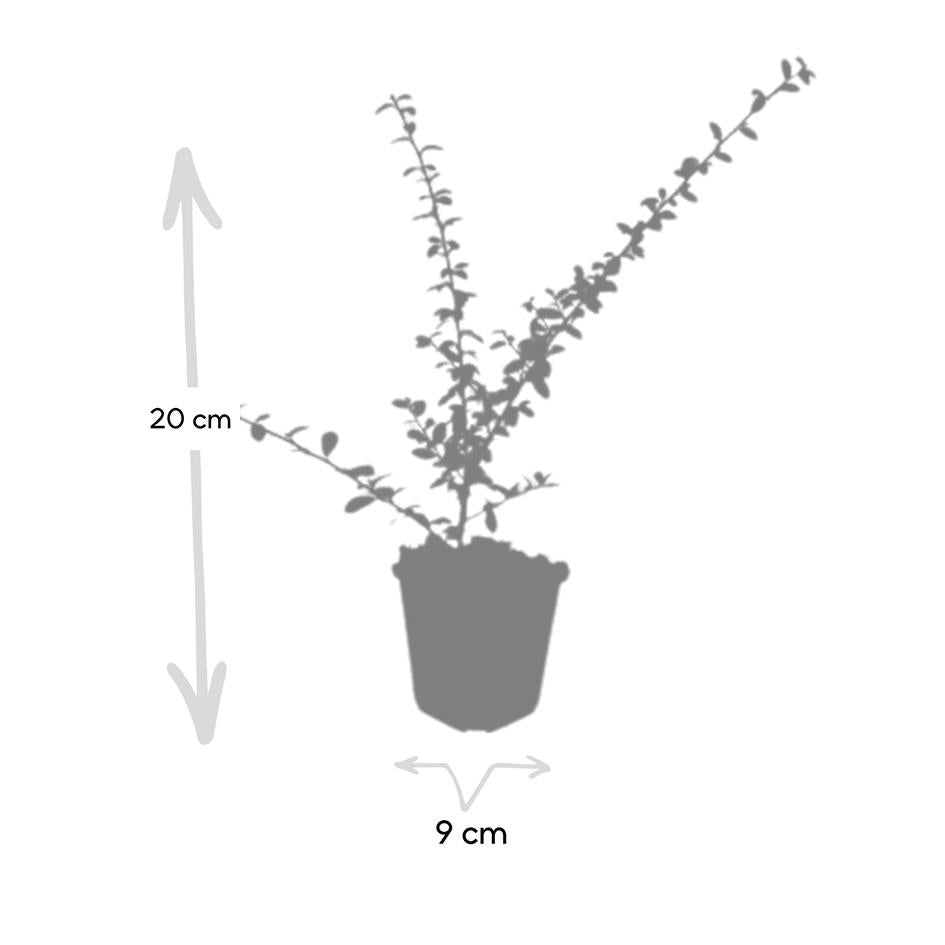
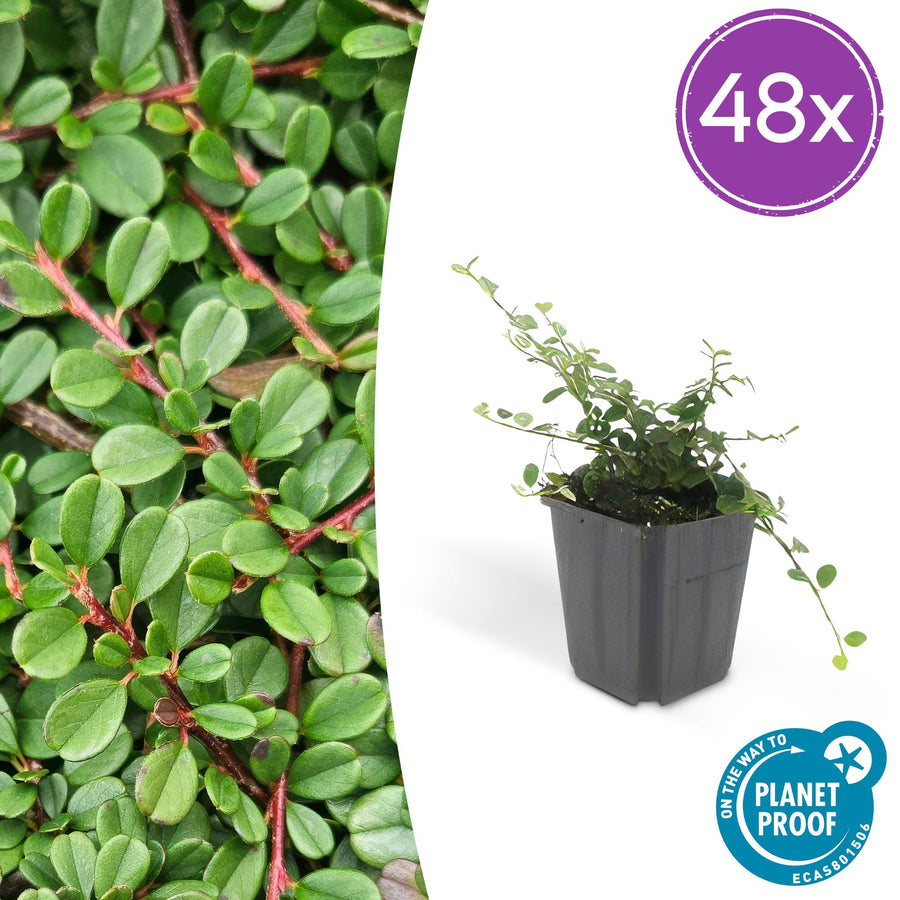
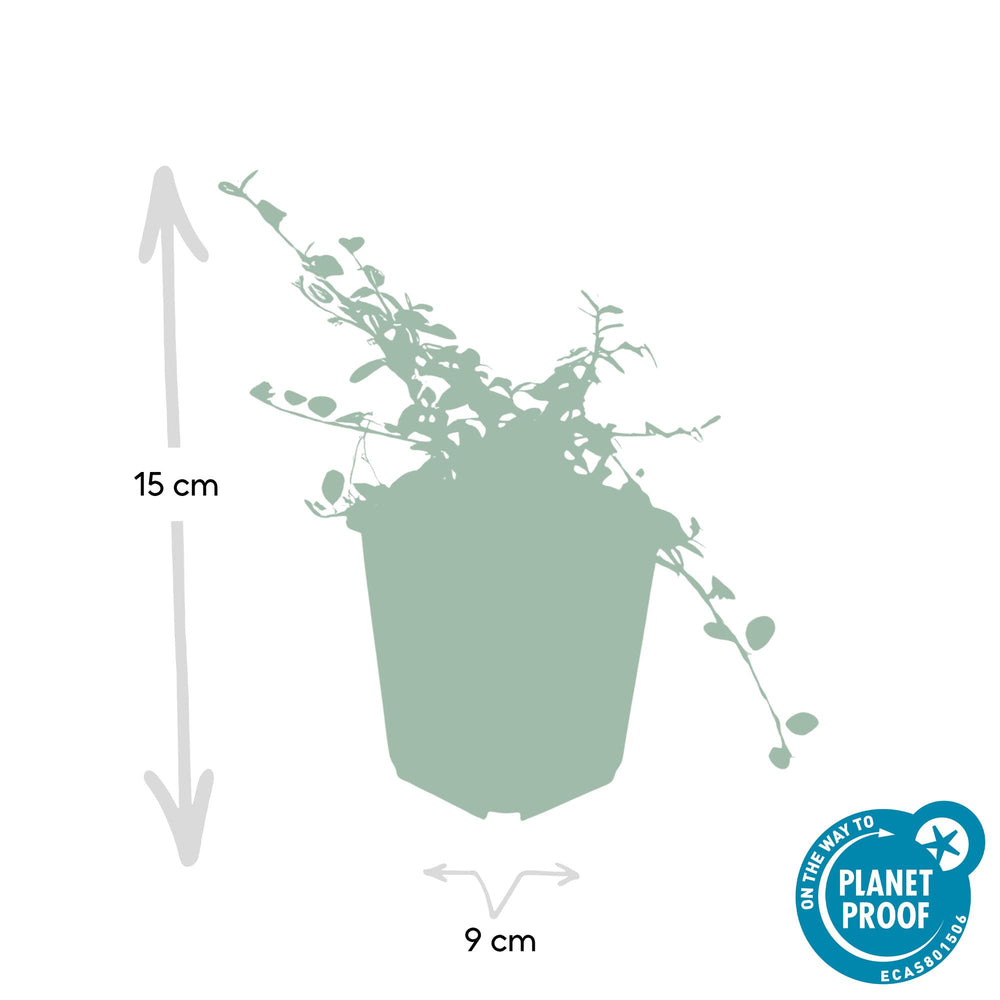
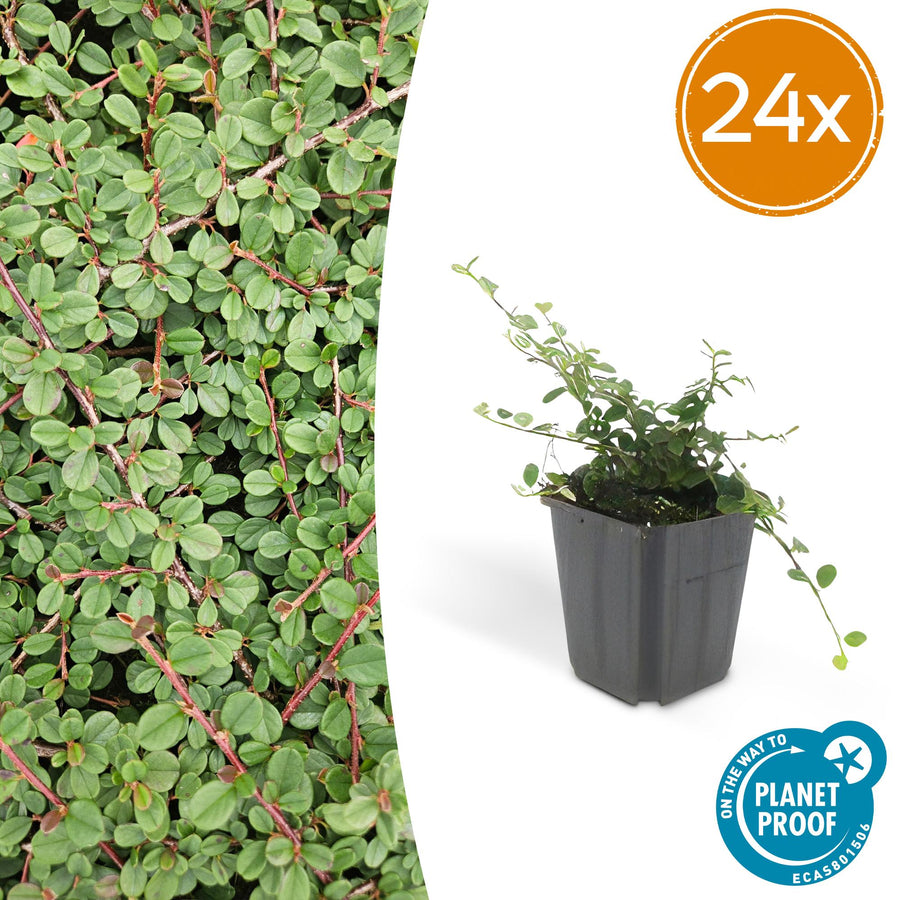
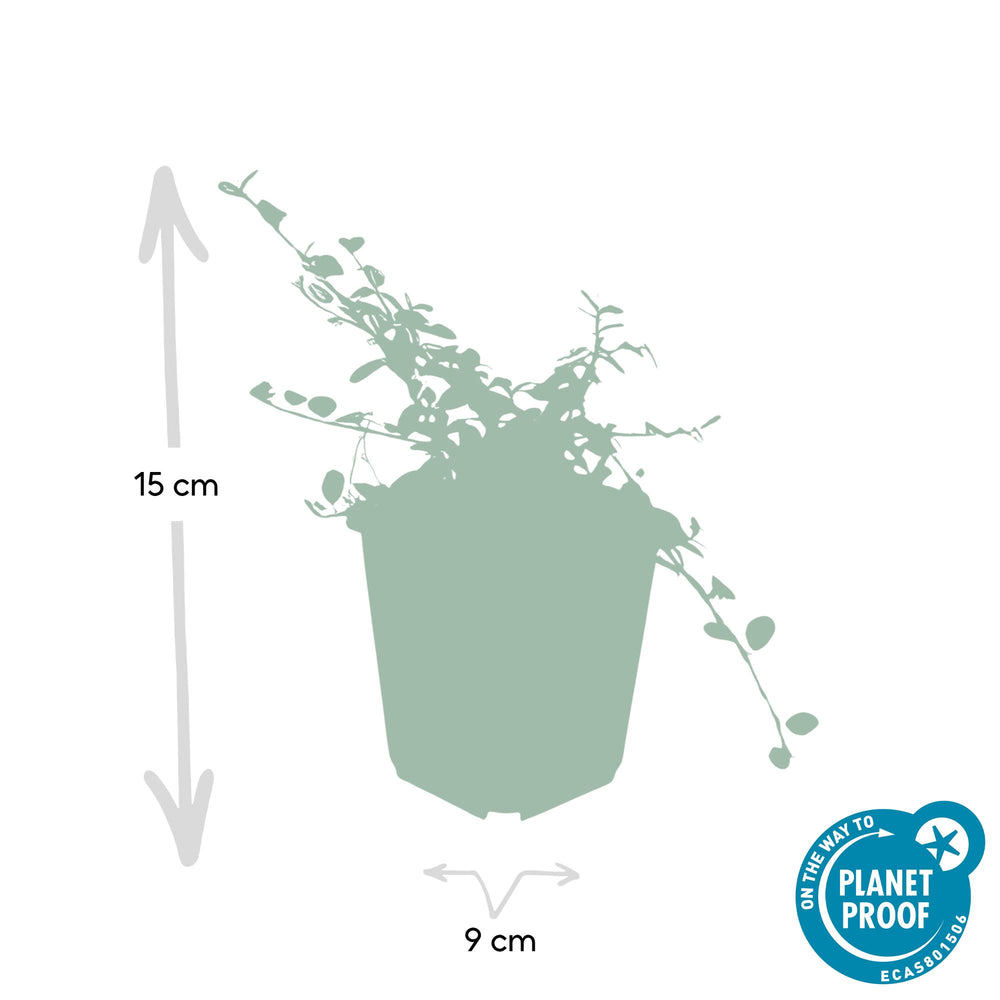
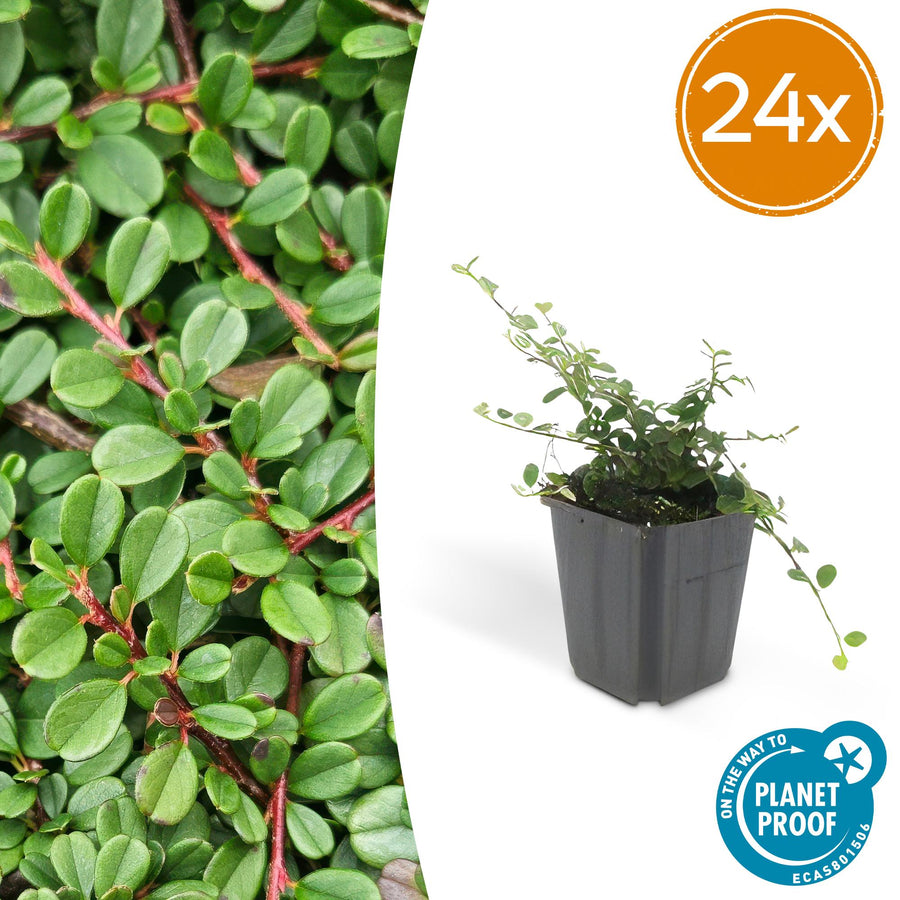
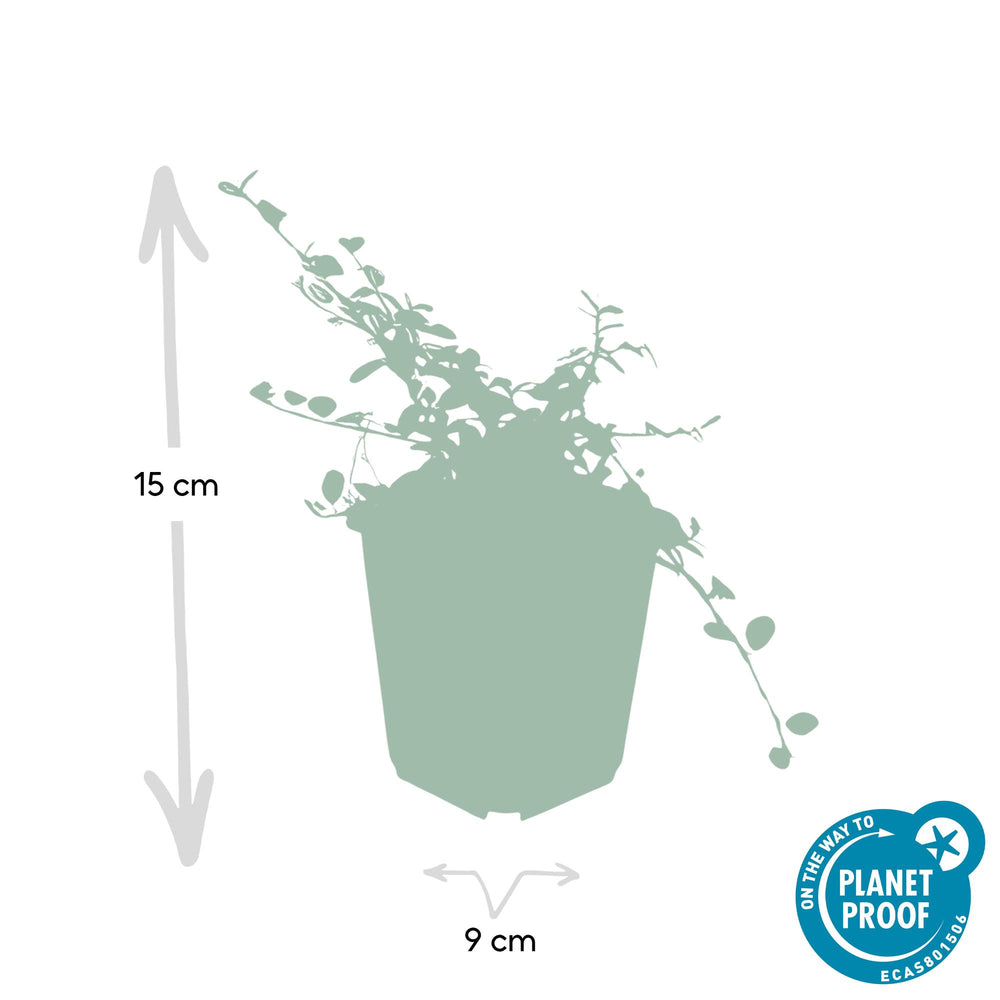
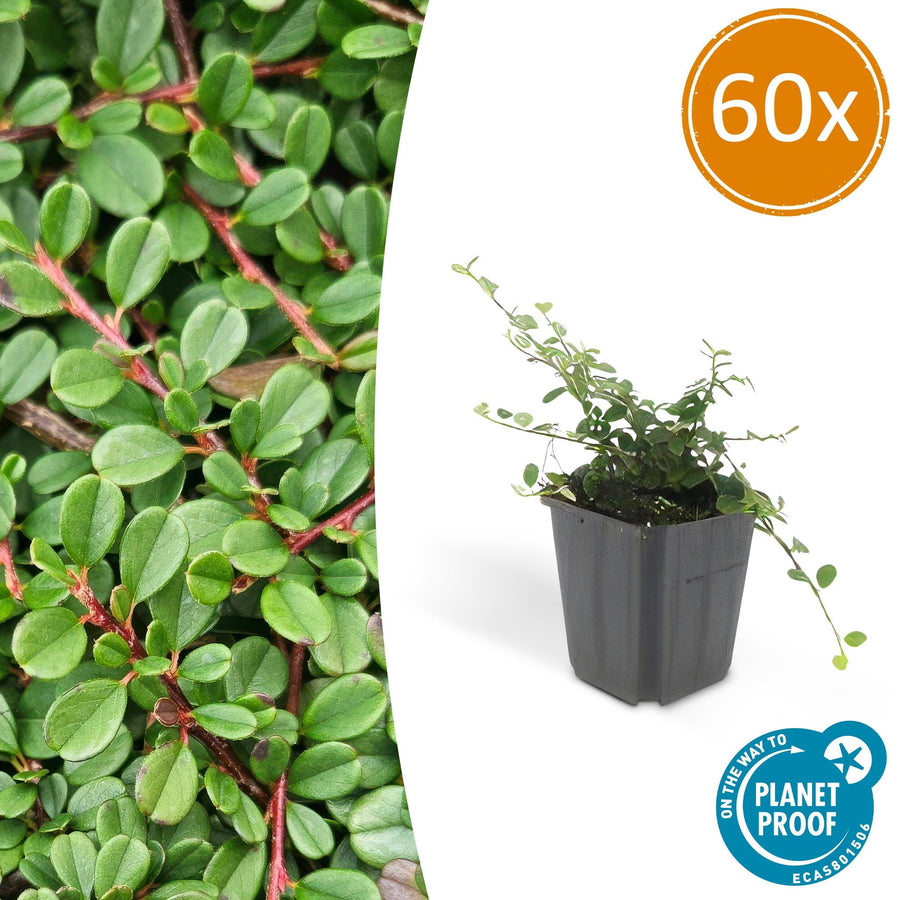
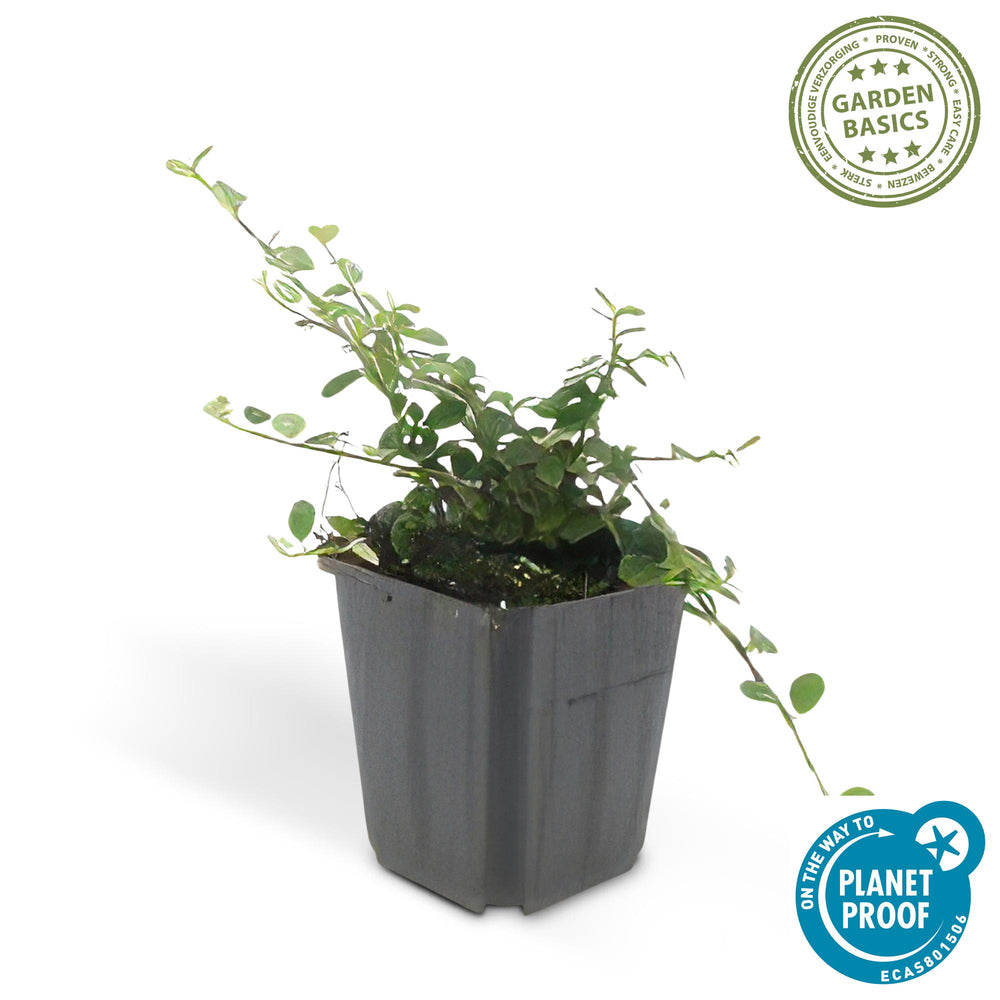
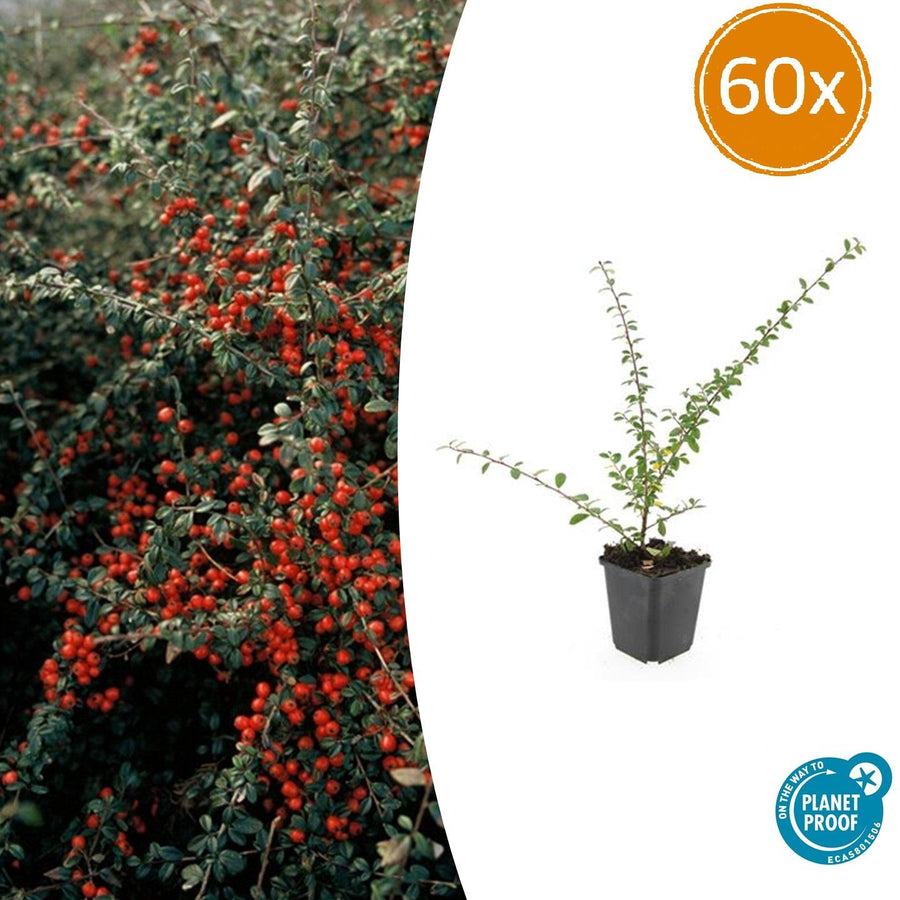
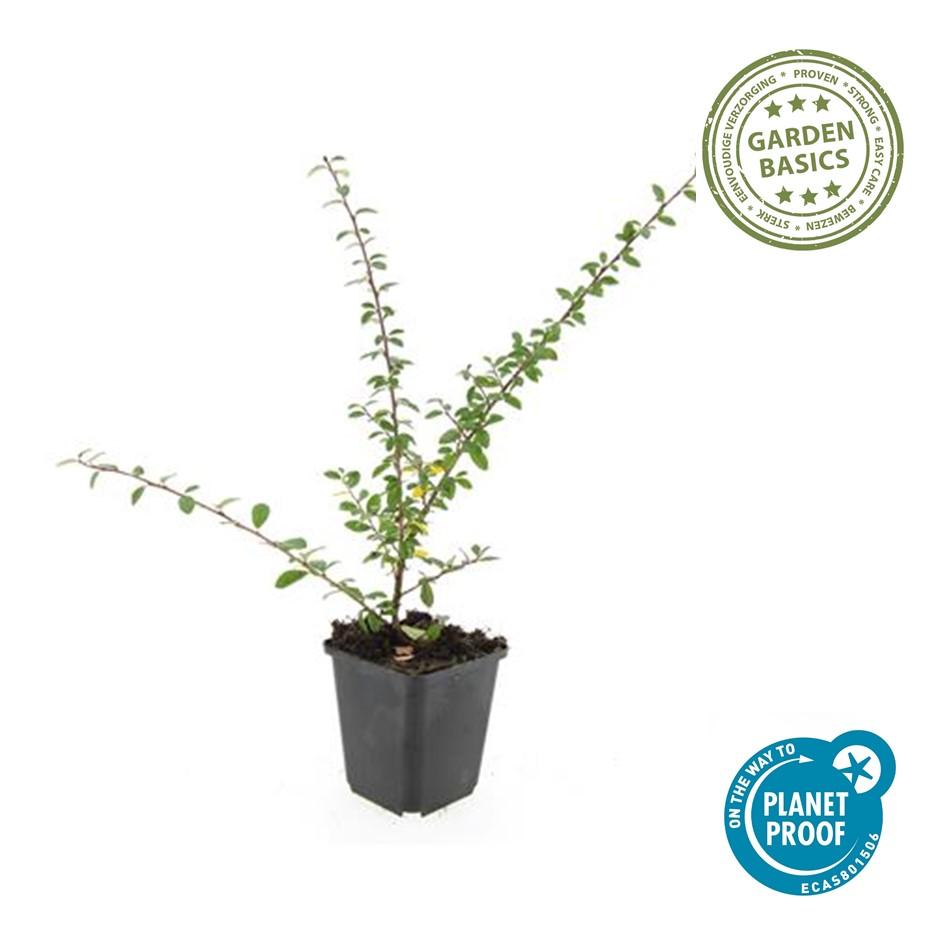
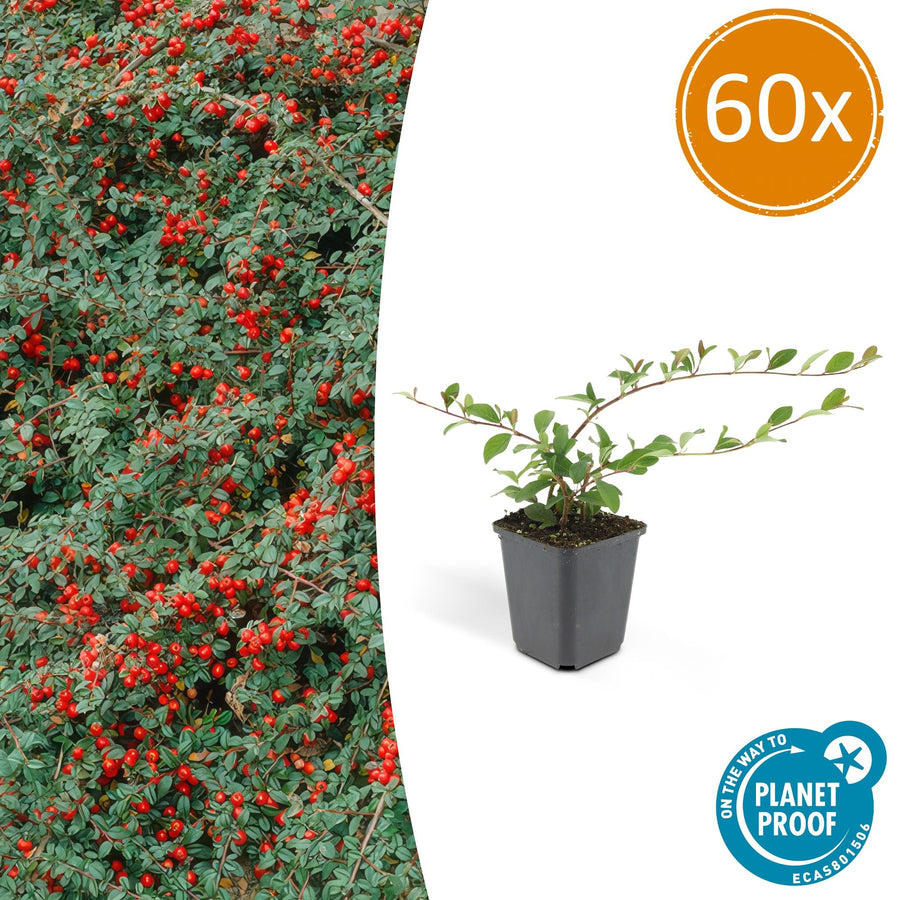
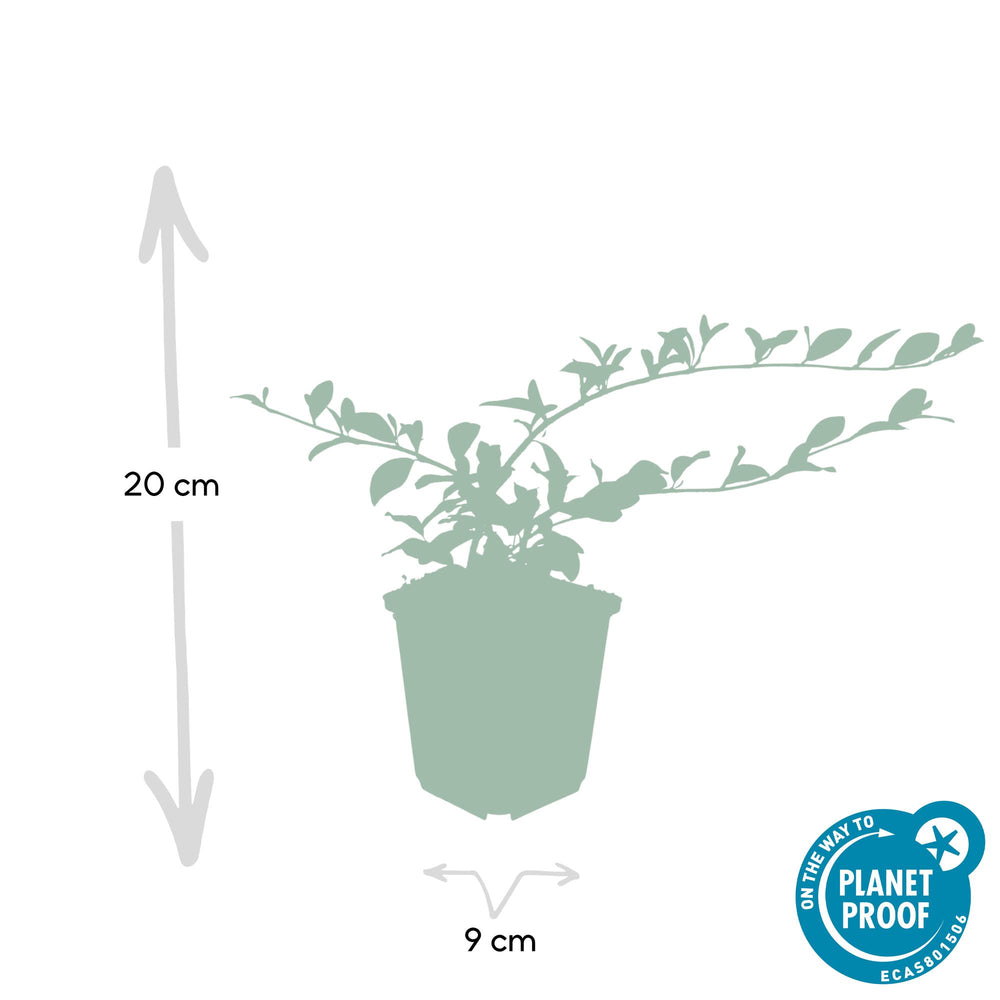
Which cotoneaster should you choose?
| Plant | Look and size | Good for |
|---|---|---|
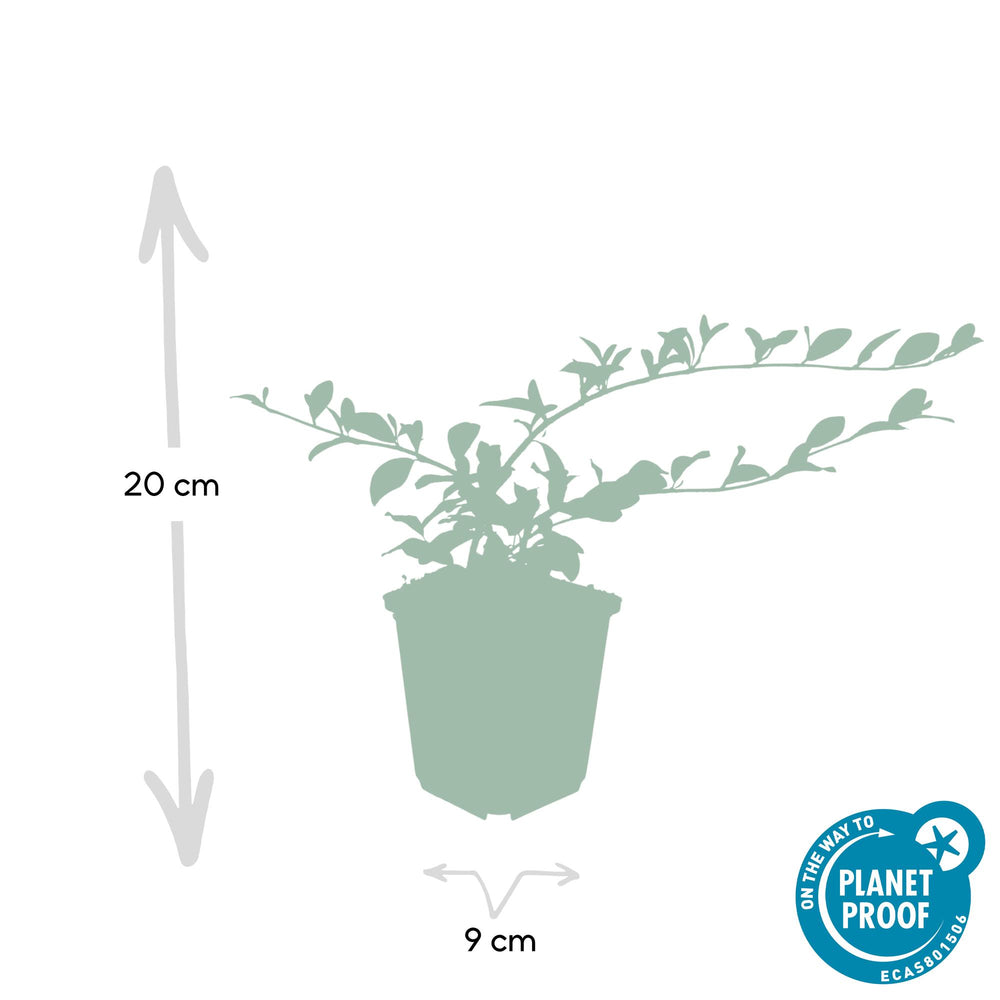
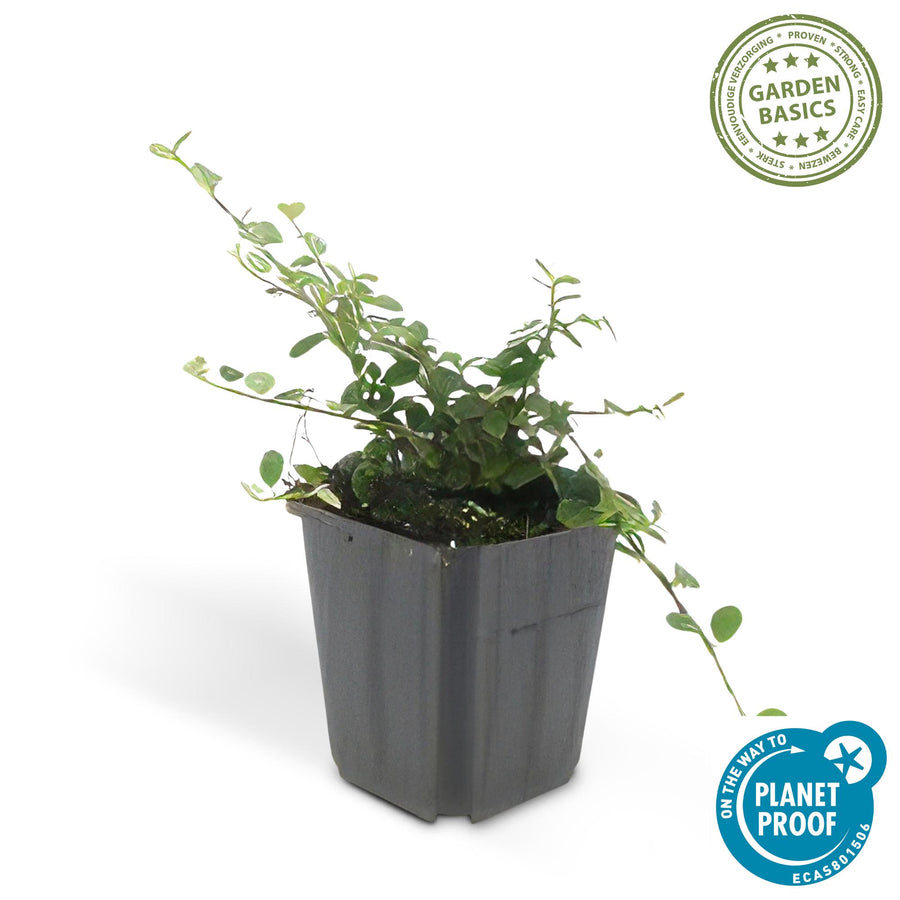
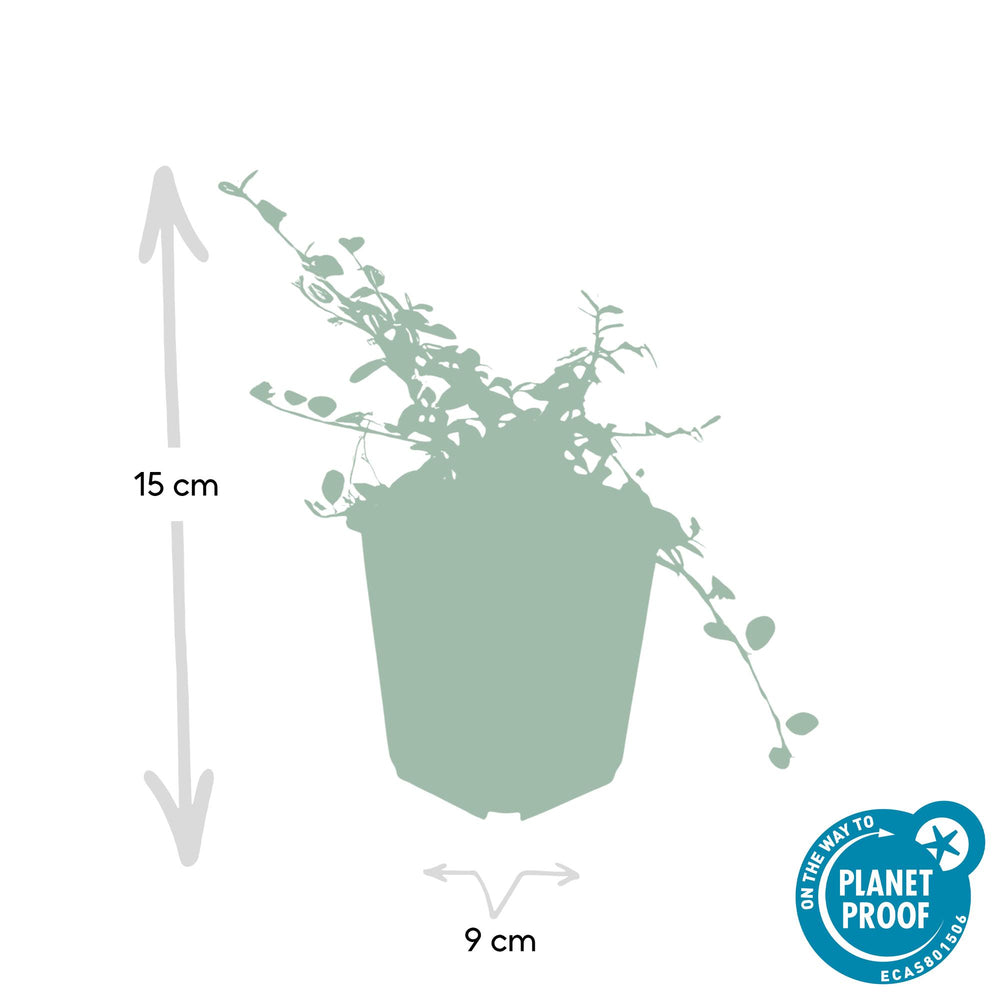
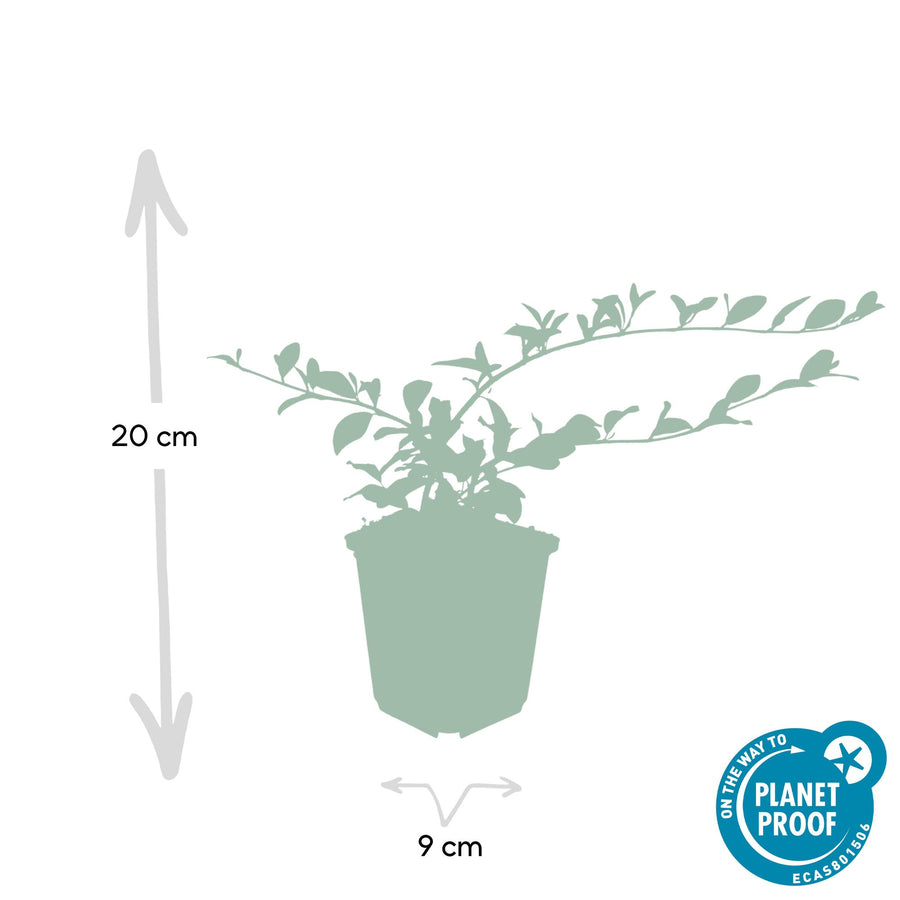
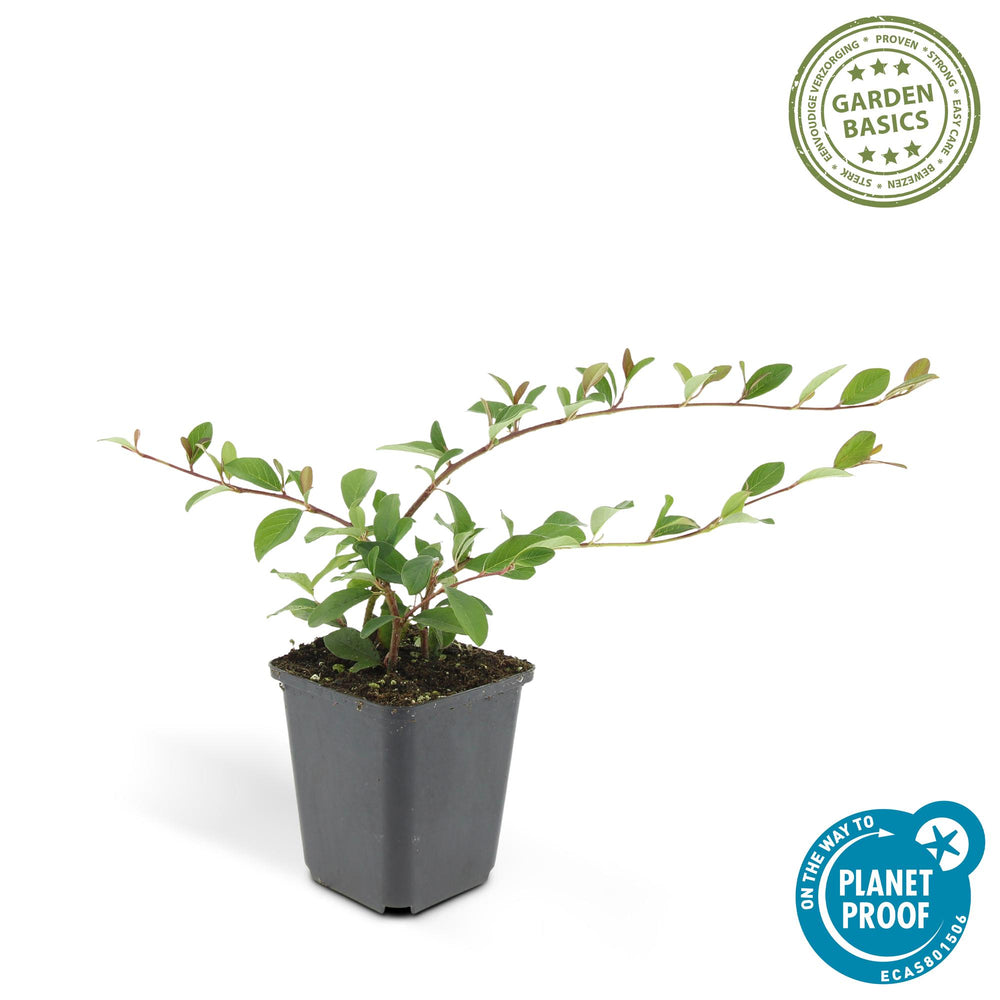
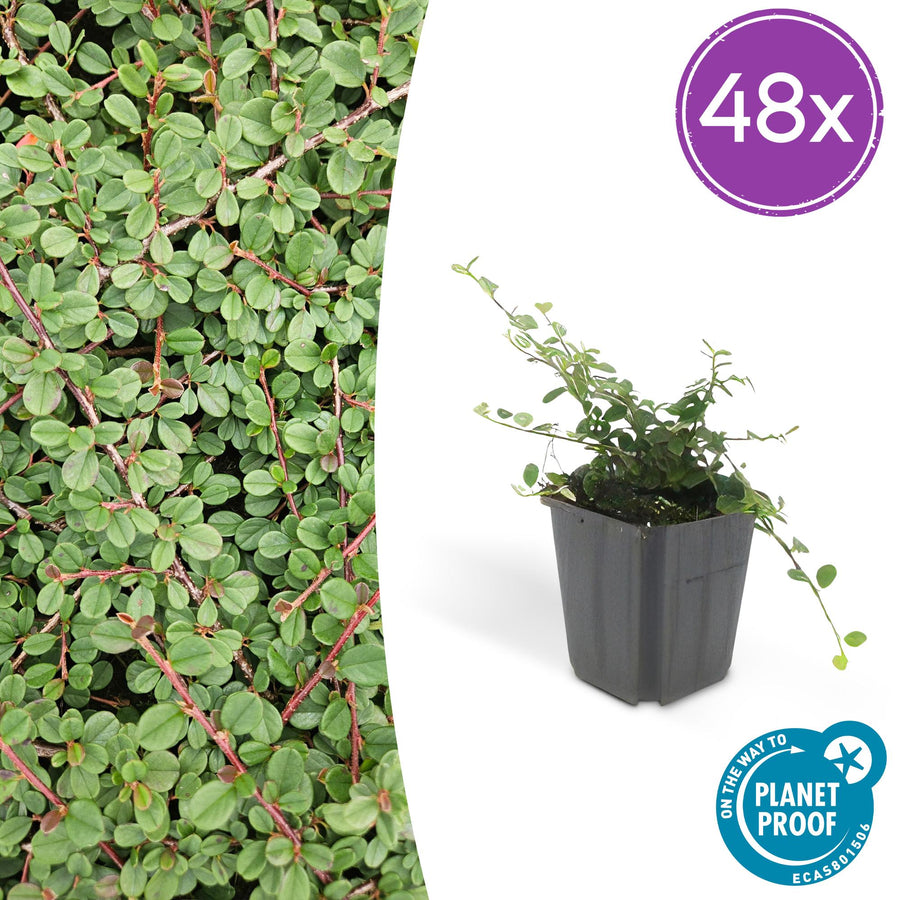
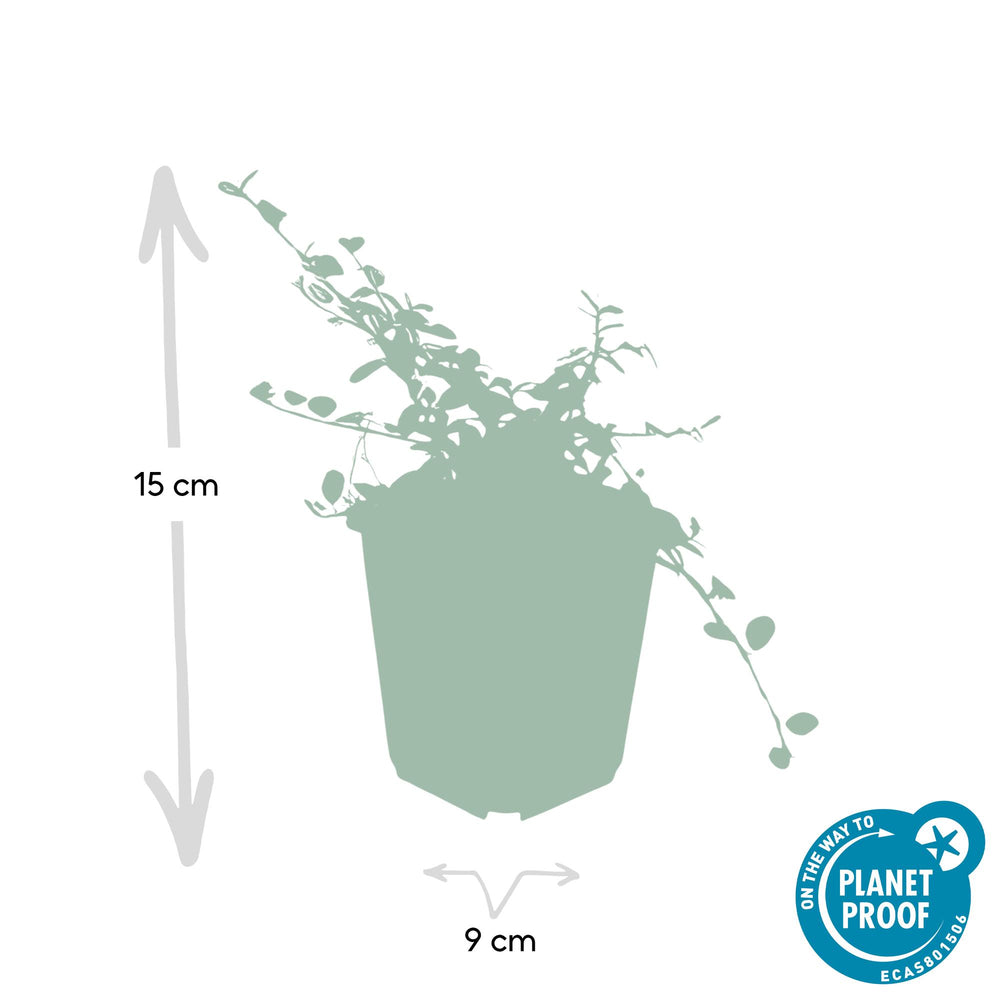
| Cotoneaster dammeri | Evergreen, trailing stems rooting as they spread; very low, about 15 to 20 cm tall | Banks, slopes and the front of borders |
| 'Coral Beauty' (C. suecicus) | Evergreen, arching, orange-red berries; about 30 to 50 cm tall | Slopes, walls and large gaps |
| 'Queen of Carpets' | Evergreen, spreading and very low, long arching stems | Covering a large area quickly |
| 'Streibs Findling' | Evergreen, very prostrate, small glossy leaves | Tight, low carpets and rockery edges |
| Cotoneaster horizontalis | Deciduous herringbone branching, good autumn colour and berries; 60 to 90 cm tall | Walls, banks and wildlife planting |
Stock changes through the year; this page lists only the lines available now.
Where does cotoneaster grow best?
Cotoneaster grows in sun to part shade in almost any free-draining soil and tolerates dry spells and poor ground once established. It suits slopes and banks, where its stems knit the soil together. See our guide to ground cover for dry sunny banks and our best ground cover plants.
How do you plant and care for cotoneaster?
Plant 40 to 60 cm apart in autumn or spring, water until established, and mulch around young plants to keep weeds down. Little pruning is needed: trim back stems that outgrow their space in late winter. The berries are for birds, not for eating.
Is cotoneaster invasive?
Some cotoneasters, especially Cotoneaster horizontalis, can self-seed where birds spread the berries. Check local guidance on planting in your area, and consider the evergreen low-growing types such as 'Coral Beauty' or 'Streibs Findling' as alternatives.
Frequently asked questions
Is cotoneaster evergreen?
Most ground cover cotoneasters, including dammeri, 'Coral Beauty', 'Queen of Carpets' and 'Streibs Findling', are evergreen. Cotoneaster horizontalis is deciduous.
How far apart should I plant cotoneaster?
About 40 to 60 cm apart for ground cover. Closer planting fills the area faster.
Does cotoneaster suit shade?
It tolerates part shade but flowers and berries best in sun to light shade.
More ground cover: ground cover plants, vinca, creeping thyme and bulk groundcover packs. To work out how many plants you need, use our plant quantity calculator.