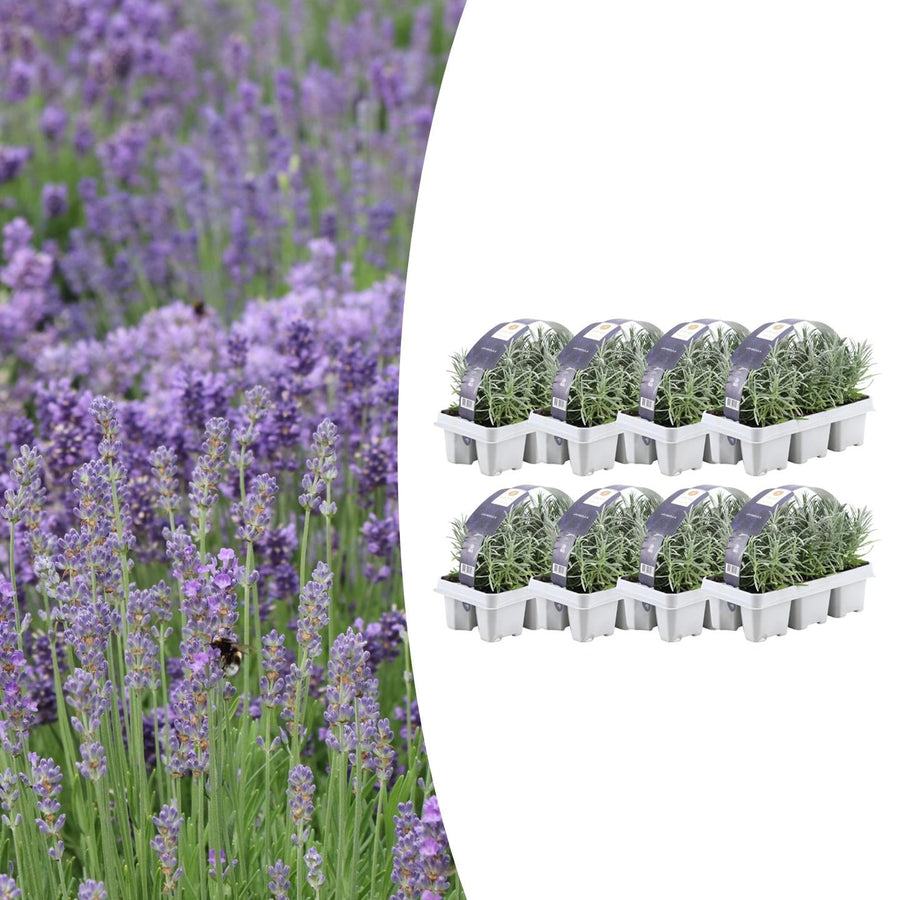
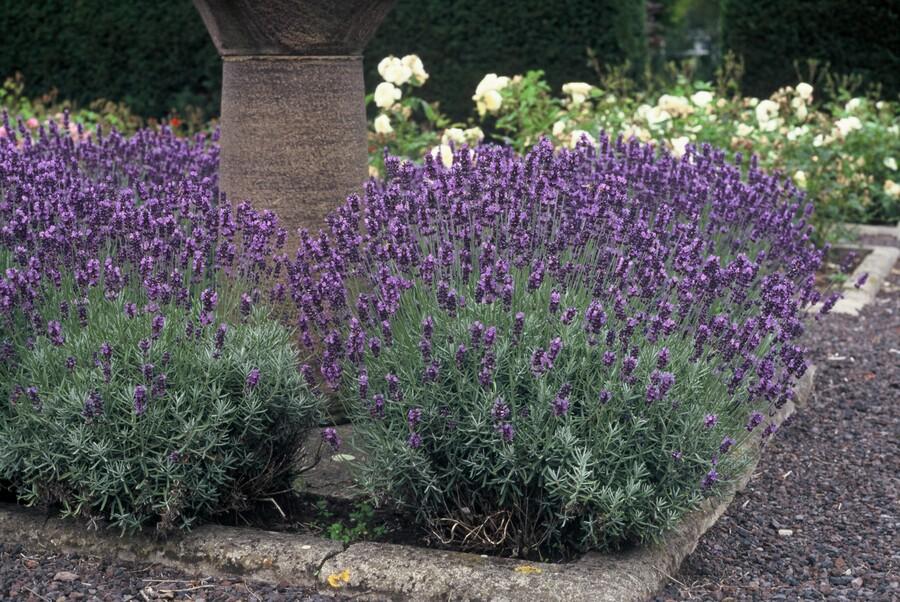
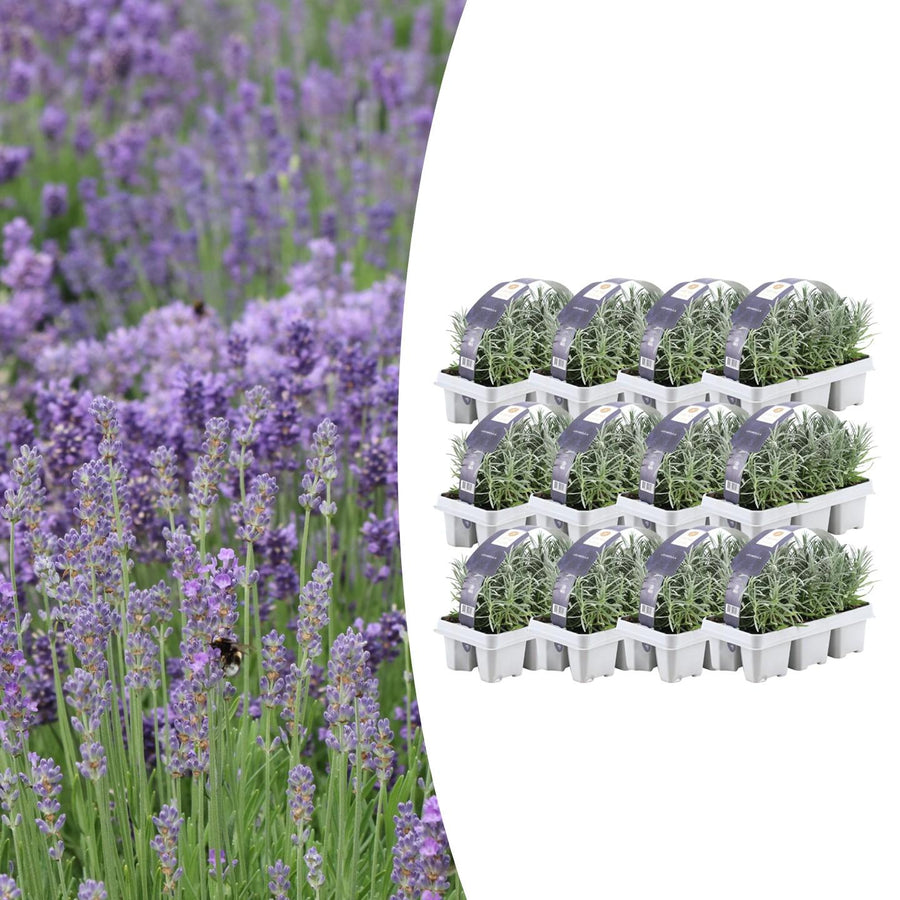
Lavender (Lavandula) is Europe's most widely grown aromatic garden plant — fragrant, drought-tolerant, bee-attracting, and requiring almost no maintenance once established. Our lavender collection features English Lavender (Lavandula angustifolia), French Lavender (Lavandula stoechas), and hybrid varieties, all available with delivery across Europe.

English Lavender vs French Lavender — Which Should I Choose?

English Lavender (Lavandula angustifolia) is the hardier choice — fully frost-hardy throughout Europe (to -15°C), longest-lived (10–20+ years), best fragrance for drying and culinary use, and blooms July–August. French Lavender (Lavandula stoechas) has distinctive 'rabbit ear' bracts, blooms earlier (May–July) and often again in autumn, but is less cold-hardy (to -5°C) — best in containers that can be brought indoors in harsh winters. For cut flowers and drying, always choose English Lavender.

How to Grow Lavender Successfully

Lavender's three requirements: full sun (minimum 6 hours direct sun daily), very well-drained soil, and good air circulation. It will not survive wet, clay, or waterlogged soil. In containers, use a gritty compost mix (50% general compost, 50% perlite or horticultural grit). Prune immediately after flowering — cut back by one third, never into old woody stems. Do not feed with nitrogen fertiliser (it promotes soft, sappy growth prone to cold damage).

Lavender Varieties for European Gardens

  • 'Hidcote' (L. angustifolia) — compact, 40cm; deep purple; one of the hardiest and most reliable varieties
  • 'Munstead' (L. angustifolia) — slightly larger, 45cm; soft lavender-blue; excellent fragrance; classic cottage garden choice
  • 'Vera' (L. angustifolia) — tall, 60cm; pale lavender; grown commercially for oil production; strong scent

Explore related: Pollinator Plants · Cottage Garden Plants · Mediterranean Plants

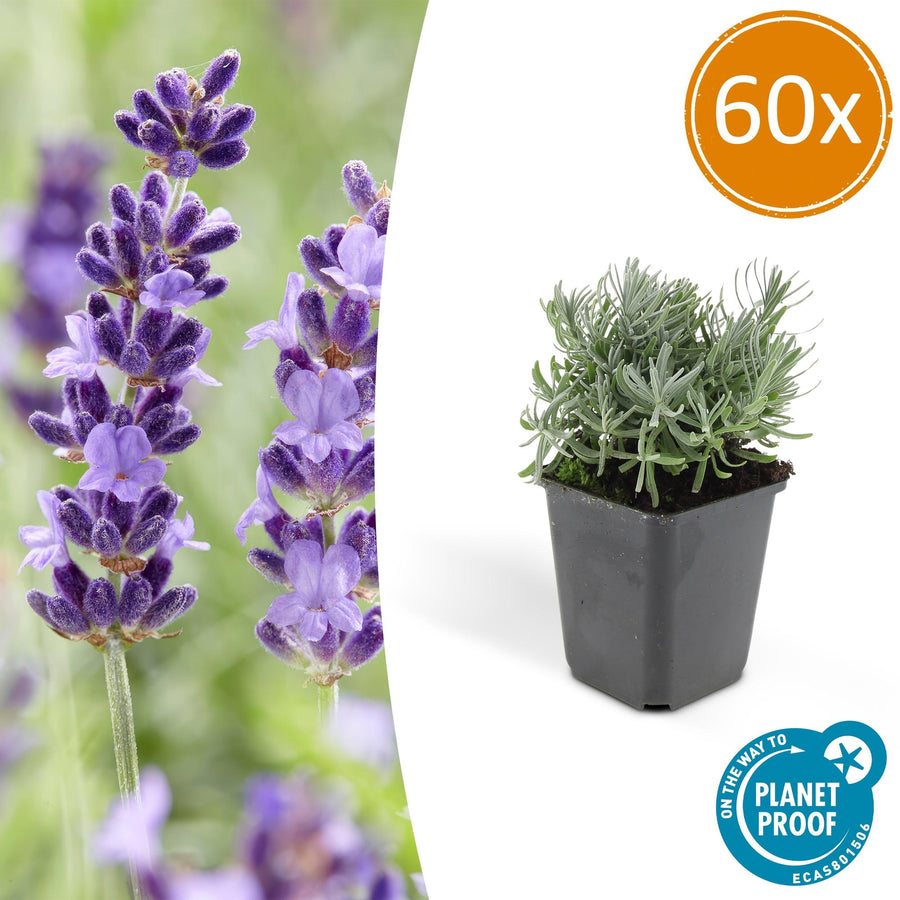
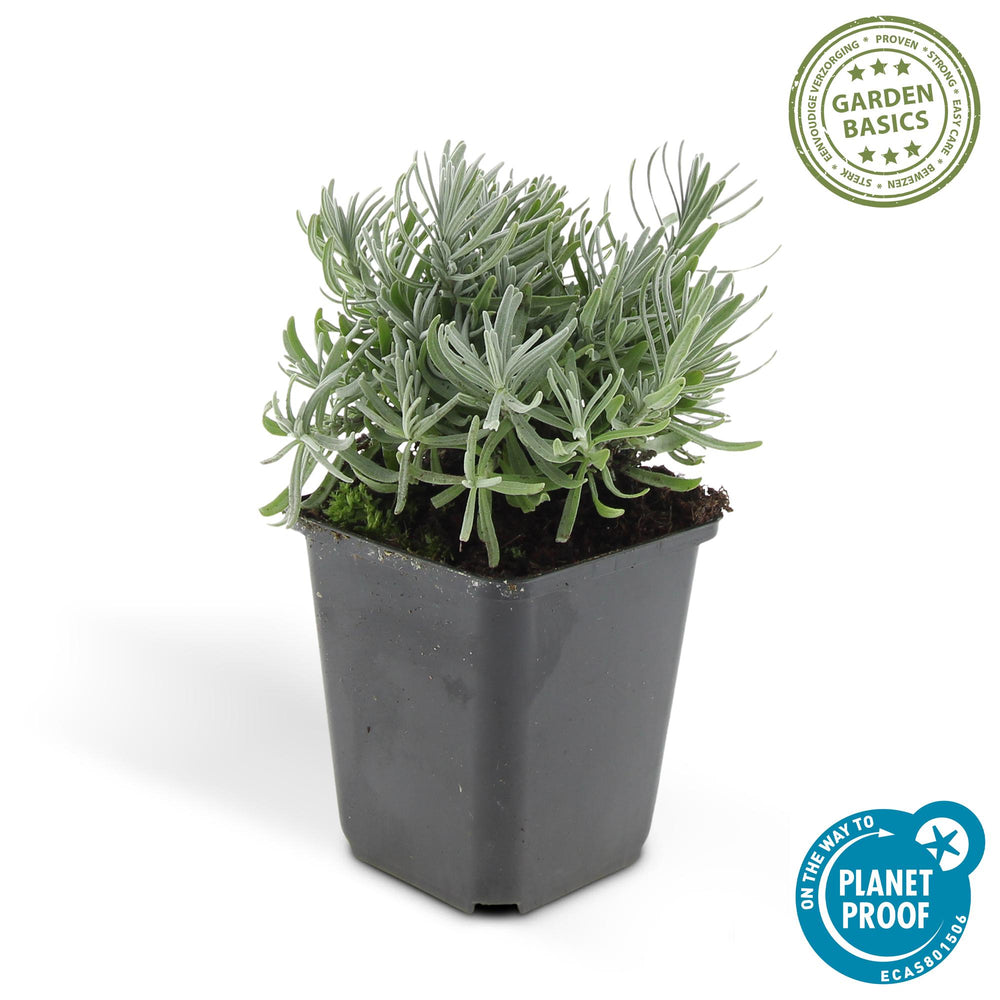
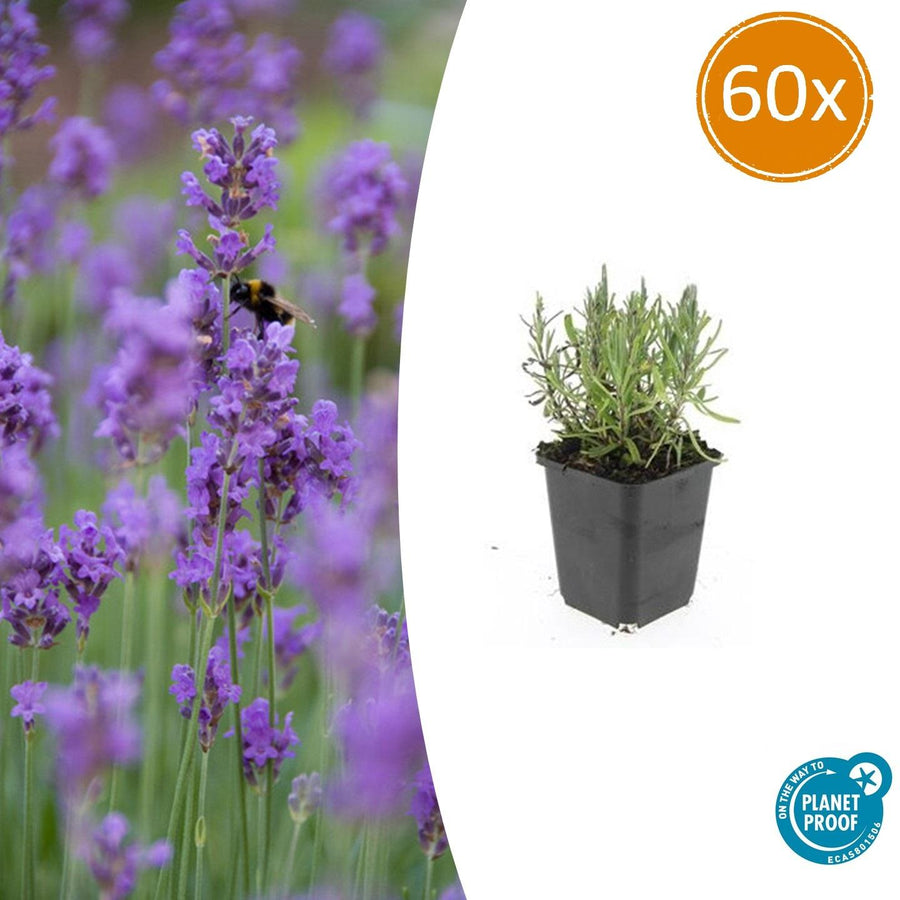
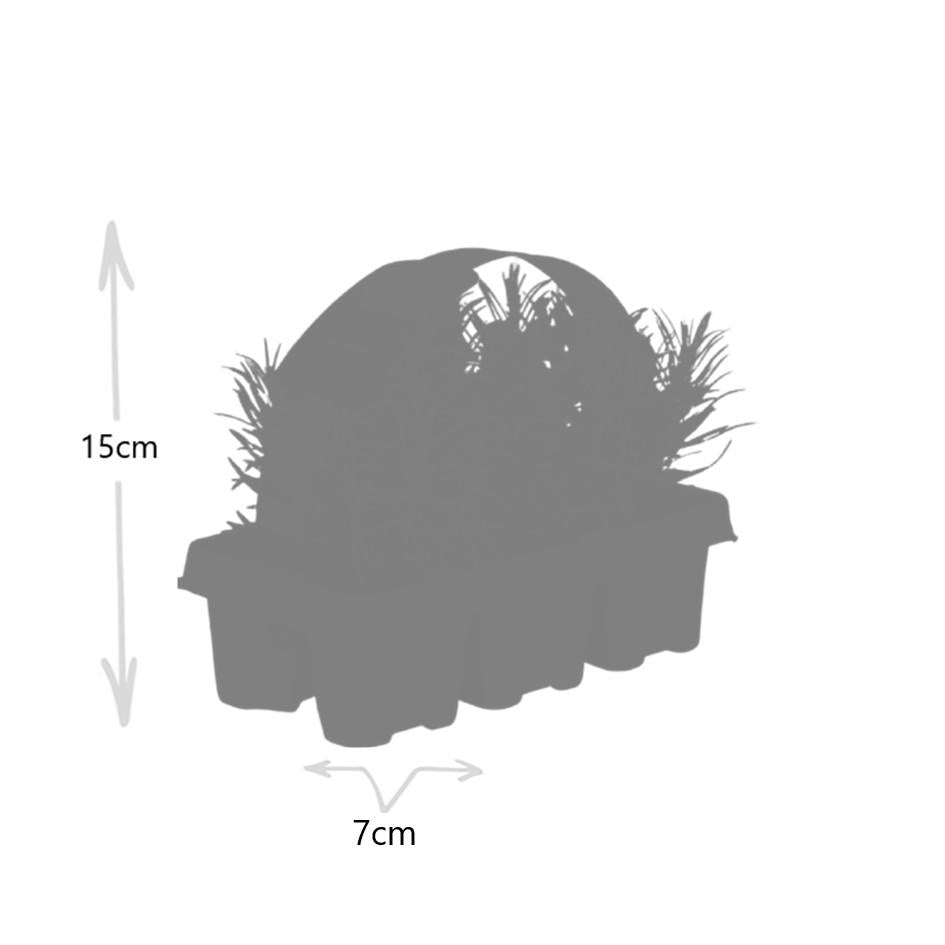
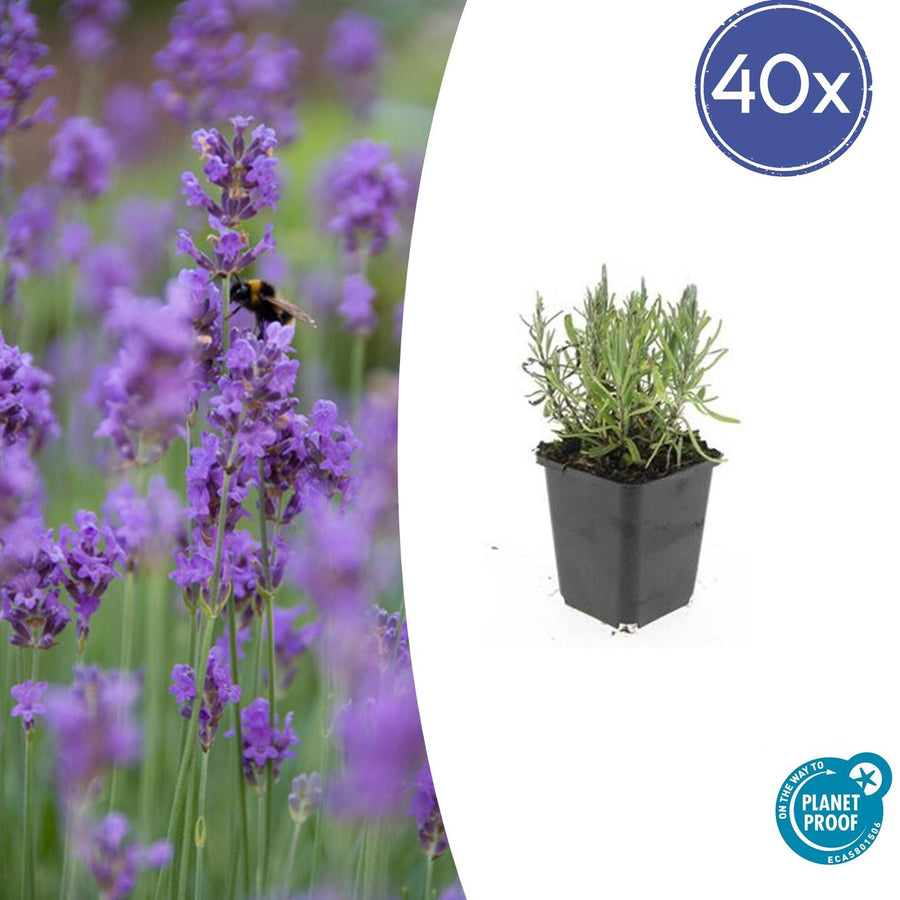
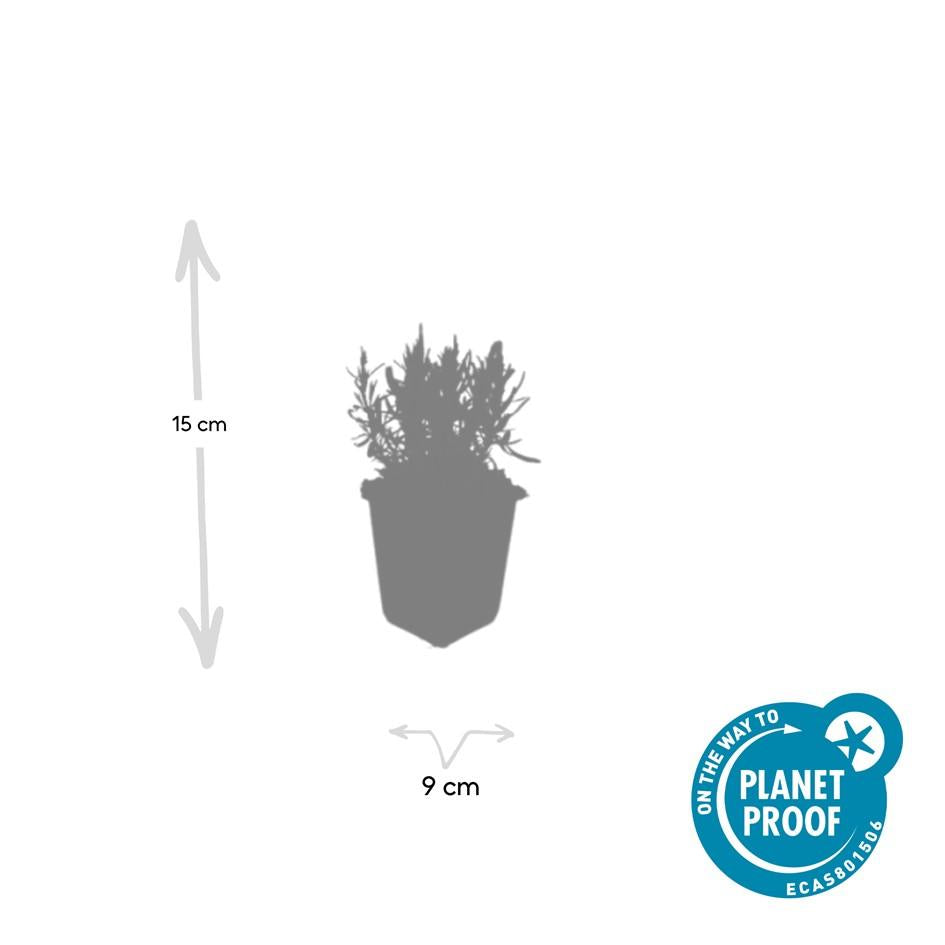
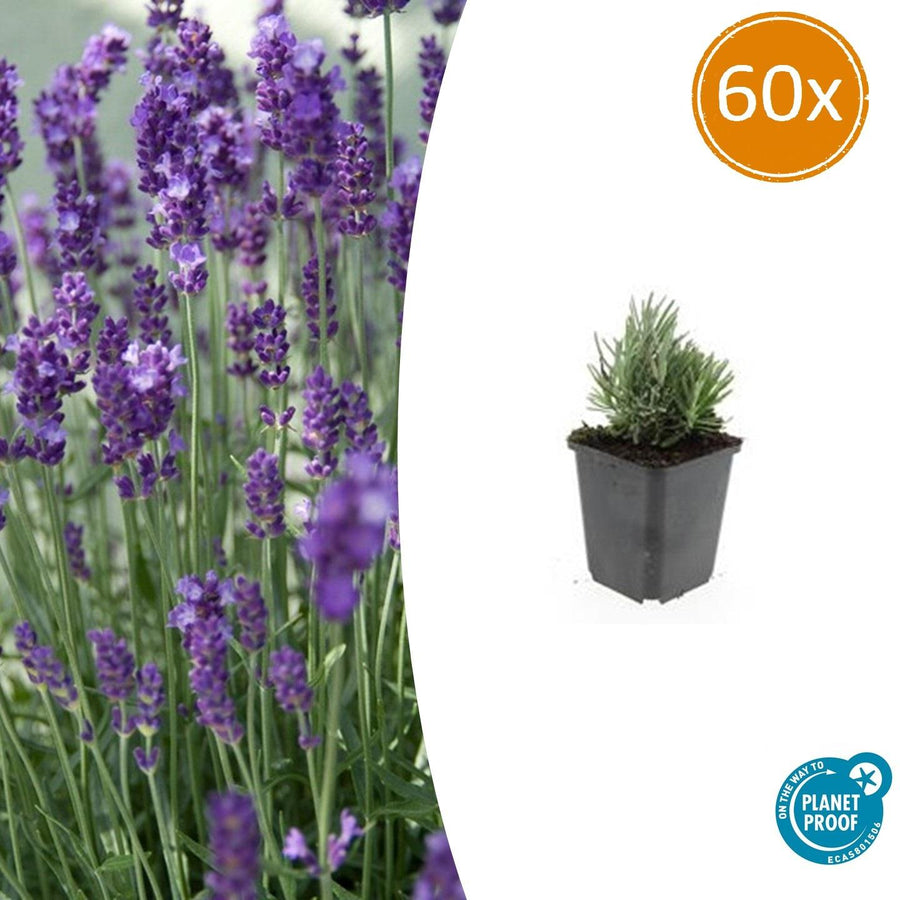
Young lavender plants with narrow green leaves in black 9cm pot, 60x pack size shown
Purple flower spikes and silvery aromatic foliage close-up of 60x Lavandula 'Munstead' - Compact Purple Lavender Plants -…
60x Lavandula 'Munstead' - Compact Purple Lavender Plants - 9cm Pots
€155.95
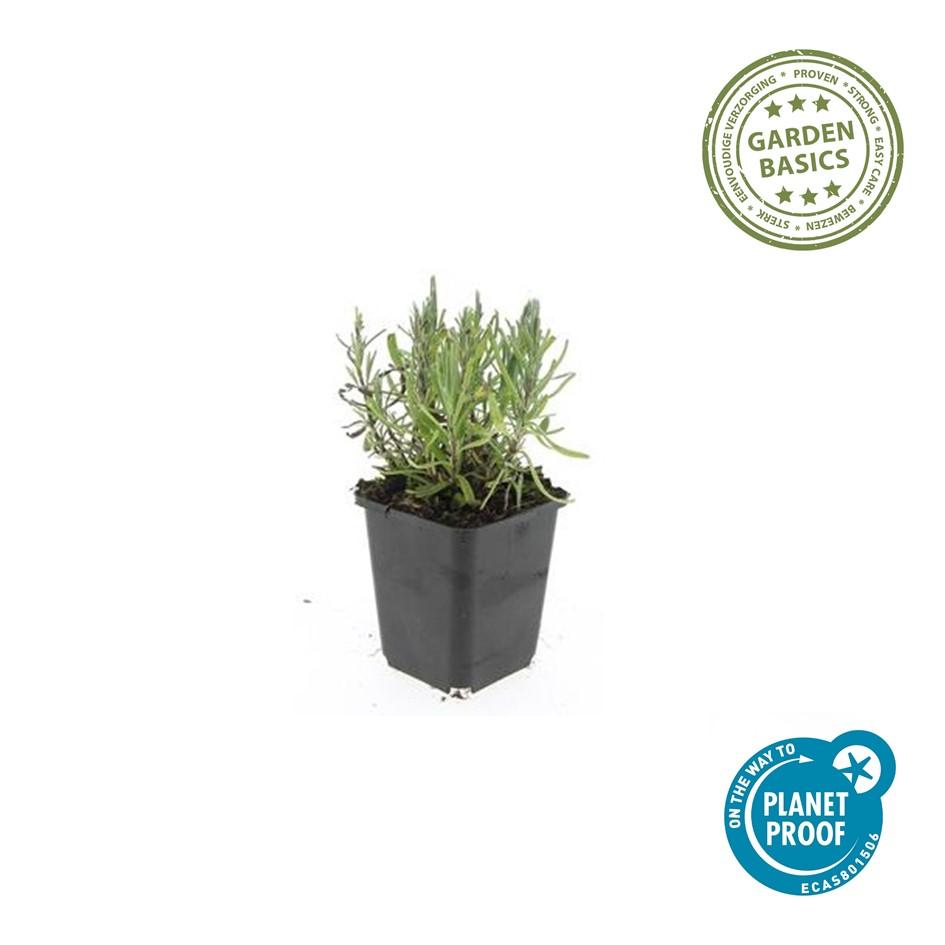
Lavender Plants Live - Lavandula Angustifolia 6 Pack Hardy Perennial — purple flower spikes and silvery aromatic foliage
Purple flower spikes and silvery aromatic foliage close-up of Lavender Plants Live - Lavandula Angustifolia 6 Pack Hardy…
Lavender Plants Live - Lavandula Angustifolia 6 Pack Hardy Perennial
€130.95
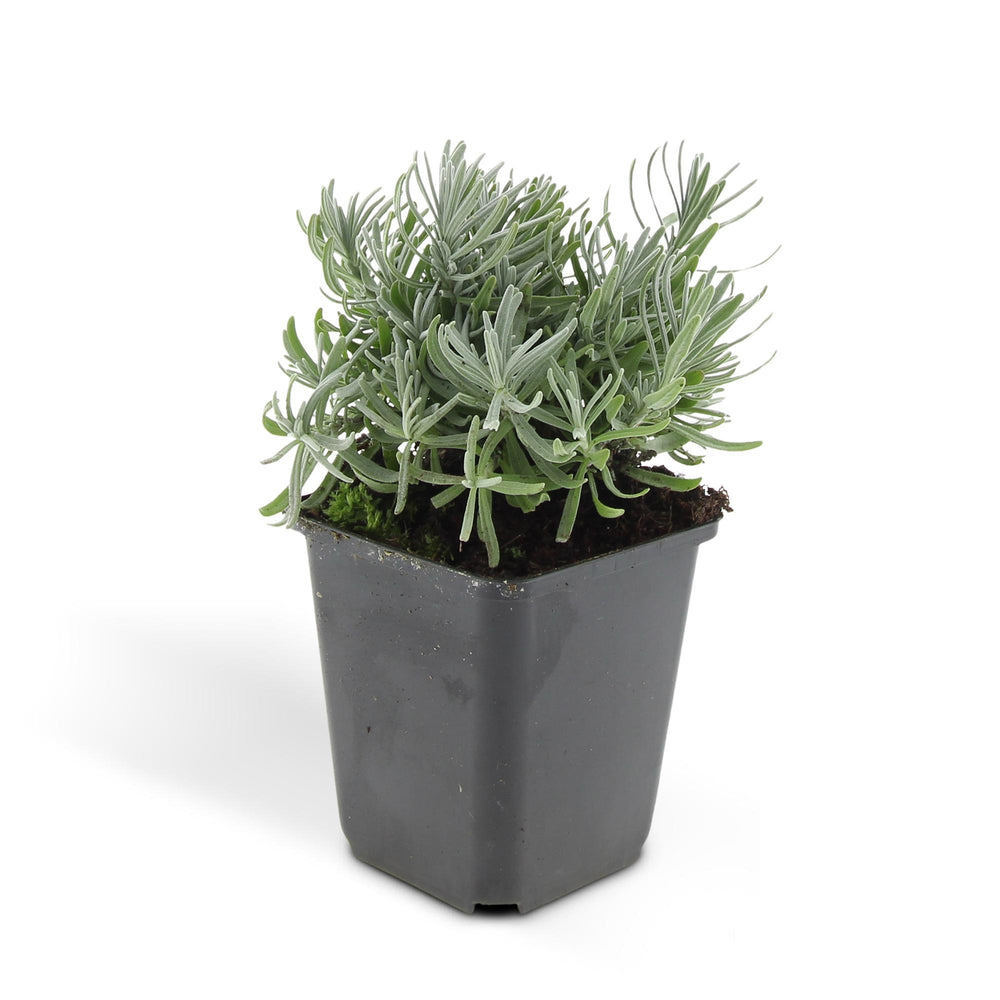
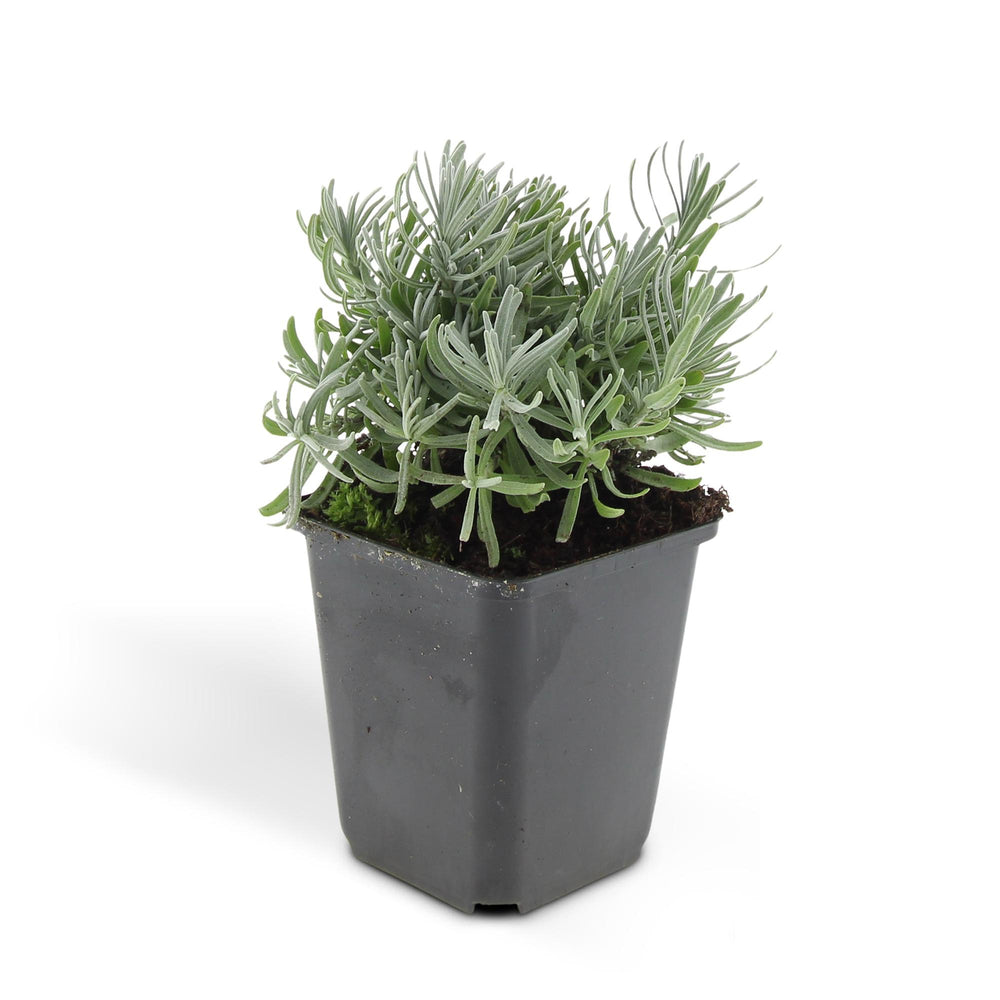
Young lavender plant with narrow green foliage in black plastic pot, 10-25cm tall
Purple flower spikes and silvery aromatic foliage close-up of 60x Dwarf Blue Lavender Plants - Compact Hardy Lavandula -…
60x Dwarf Blue Lavender Plants - Compact Hardy Lavandula - 10-25cm
€155.95
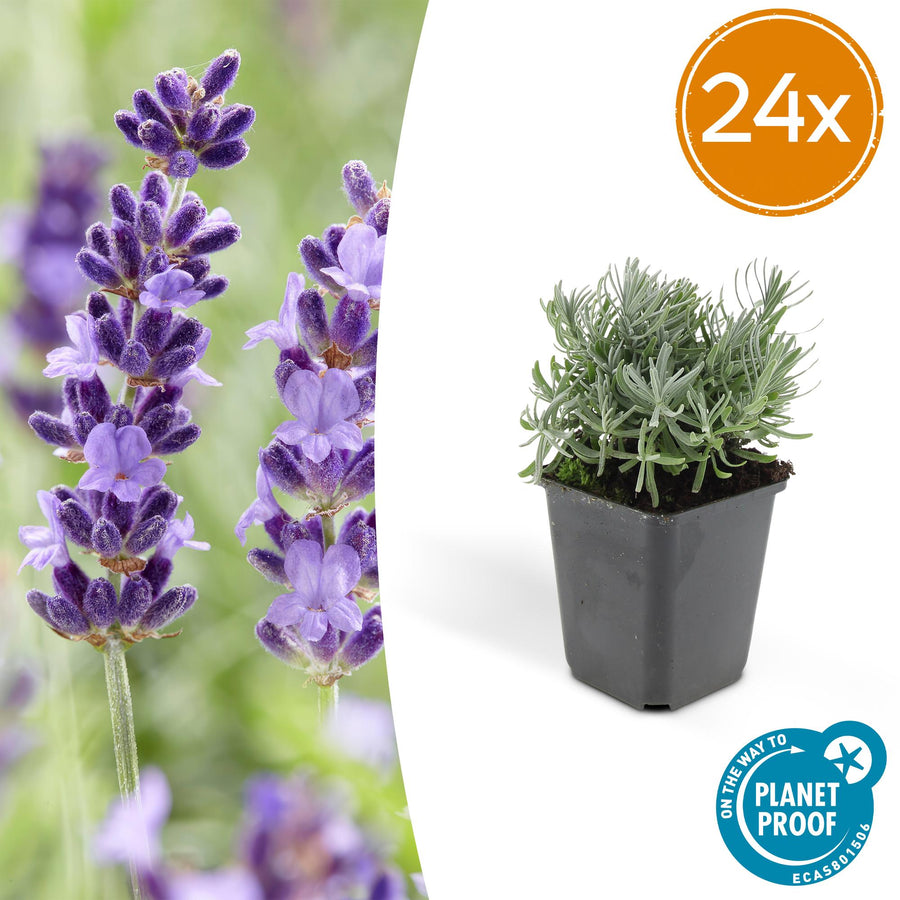
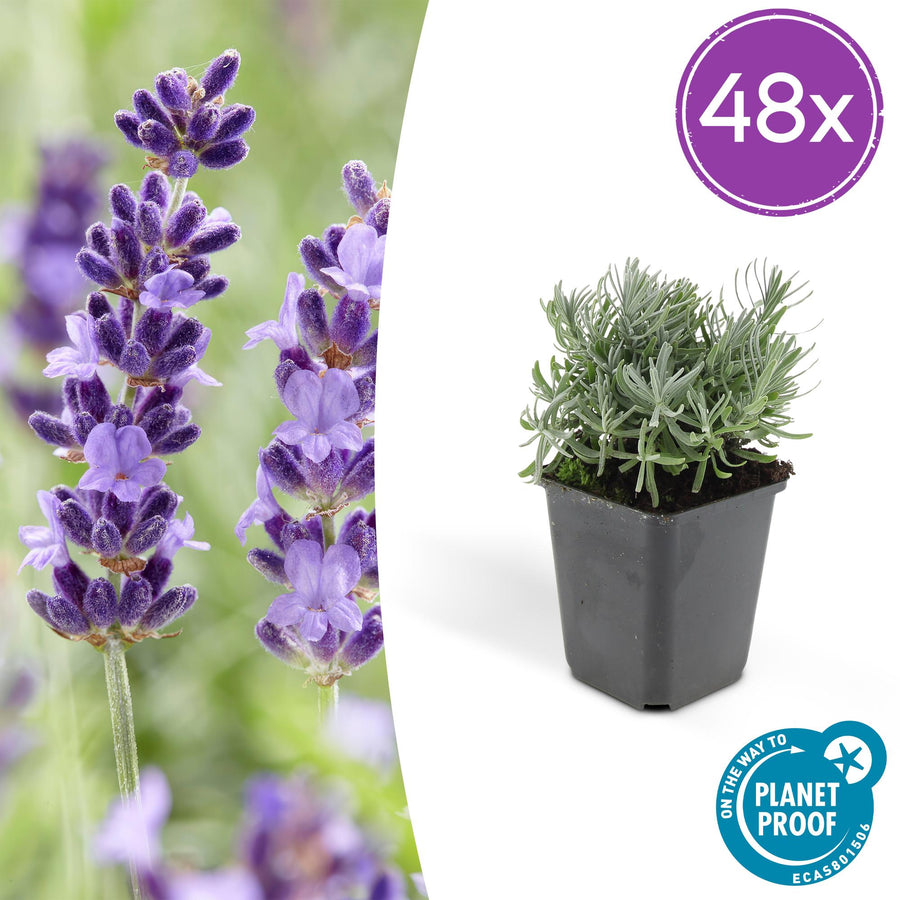
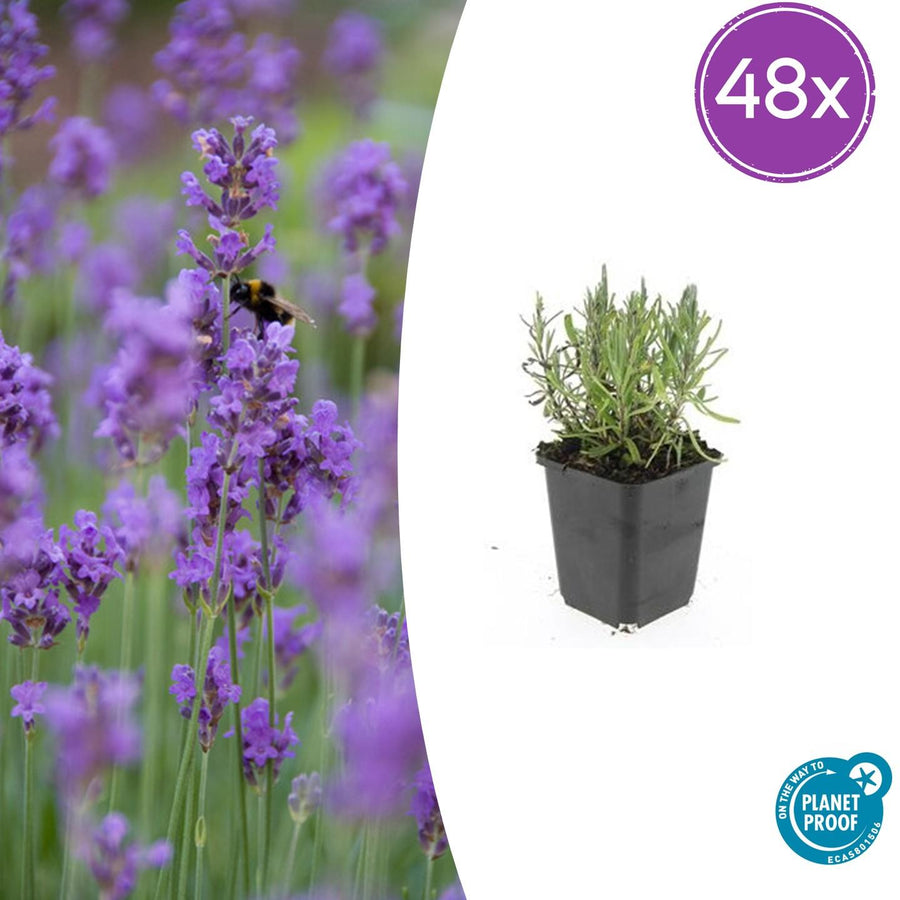
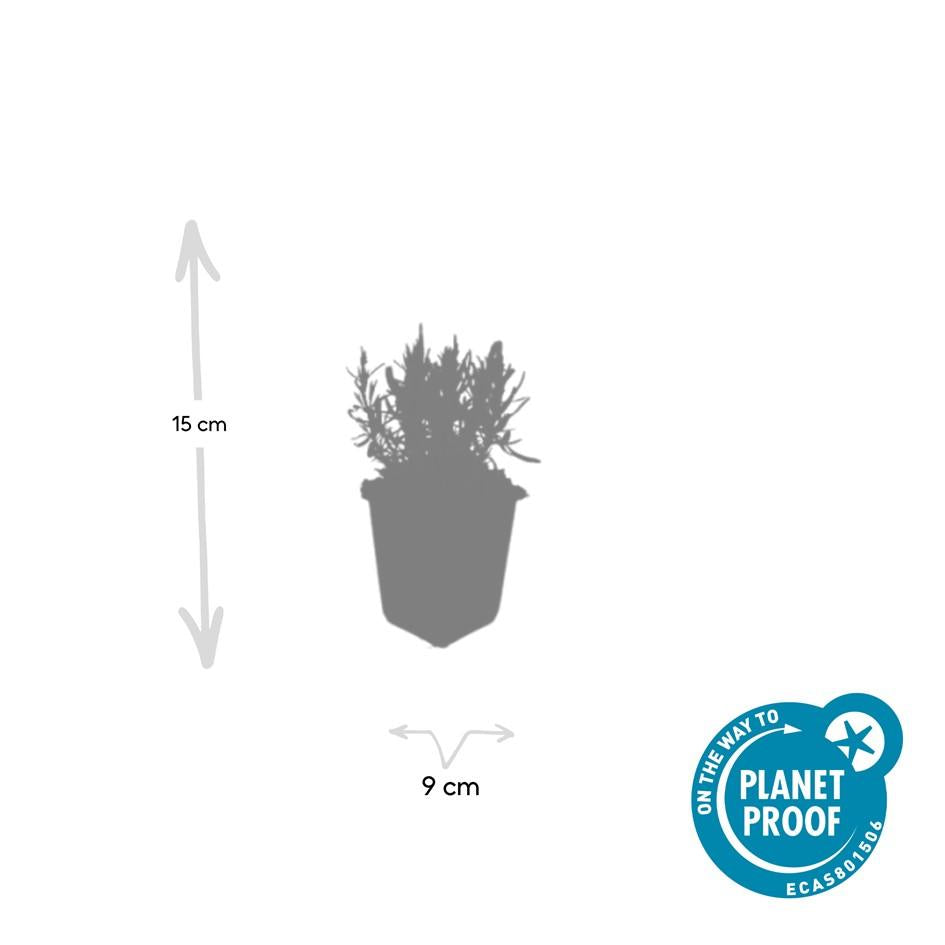
Lavender 'Munstead' plant in black pot with narrow green foliage and purple flower spikes, shown individually and in…
Purple flower spikes and silvery aromatic foliage close-up of 48x Lavandula 'Munstead' Purple Lavender Plants - 10-25cm Ø9cm
48x Lavandula 'Munstead' Purple Lavender Plants - 10-25cm Ø9cm
€129.95

Lavender Plants — English & French Lavender

11 produktów

Lavender (Lavandula) is Europe's most widely grown aromatic garden plant — fragrant, drought-tolerant, bee-attracting, and requiring almost no maintenance once established. Our lavender collection features English Lavender (Lavandula angustifolia), French Lavender (Lavandula stoechas), and hybrid varieties, all available with delivery across Europe.

English Lavender vs French Lavender — Which Should I Choose?

English Lavender (Lavandula angustifolia) is the hardier choice — fully frost-hardy throughout Europe (to -15°C), longest-lived (10–20+ years), best fragrance for drying and culinary use, and blooms July–August. French Lavender (Lavandula stoechas) has distinctive 'rabbit ear' bracts, blooms earlier (May–July) and often again in autumn, but is less cold-hardy (to -5°C) — best in containers that can be brought indoors in harsh winters. For cut flowers and drying, always choose English Lavender.

How to Grow Lavender Successfully

Lavender's three requirements: full sun (minimum 6 hours direct sun daily), very well-drained soil, and good air circulation. It will not survive wet, clay, or waterlogged soil. In containers, use a gritty compost mix (50% general compost, 50% perlite or horticultural grit). Prune immediately after flowering — cut back by one third, never into old woody stems. Do not feed with nitrogen fertiliser (it promotes soft, sappy growth prone to cold damage).

Lavender Varieties for European Gardens

  • 'Hidcote' (L. angustifolia) — compact, 40cm; deep purple; one of the hardiest and most reliable varieties
  • 'Munstead' (L. angustifolia) — slightly larger, 45cm; soft lavender-blue; excellent fragrance; classic cottage garden choice
  • 'Vera' (L. angustifolia) — tall, 60cm; pale lavender; grown commercially for oil production; strong scent

Explore related: Pollinator Plants · Cottage Garden Plants · Mediterranean Plants

Ostatnio przeglądane